Spend five minutes reading retirement travel blogs or watching TV travel ads and you could be forgiven for thinking every woman over 60 is sipping champagne on a Rhine River cruise and wheeling matching designer luggage through a luxury hotel lobby.
Apparently we’re all gliding around Europe on curated luxury tours with private transfers, upgraded cabins, and a wine package included.
Meanwhile, many real women are sitting at home with a calculator, trying to work out whether they can afford the airfare without destroying next month’s grocery budget.
There’s a conversation missing from modern travel media — and it’s this:
Not every retiree is wealthy.
In fact, many aren’t even close.
But they still have the desire — and the right — to enjoy travel.
Contents
Affiliate Disclosure: Some of the links on this page are affiliate links. This means I may receive a small commission (at no further expense to you) if you click through and make a purchase. Learn more.
The Fantasy Version of Retirement Travel
Somewhere along the line, retirement travel stopped being presented as exploration and started being marketed as a reward for financial success. It’s as though we’re all recently released investment bankers with unlimited discretionary income.
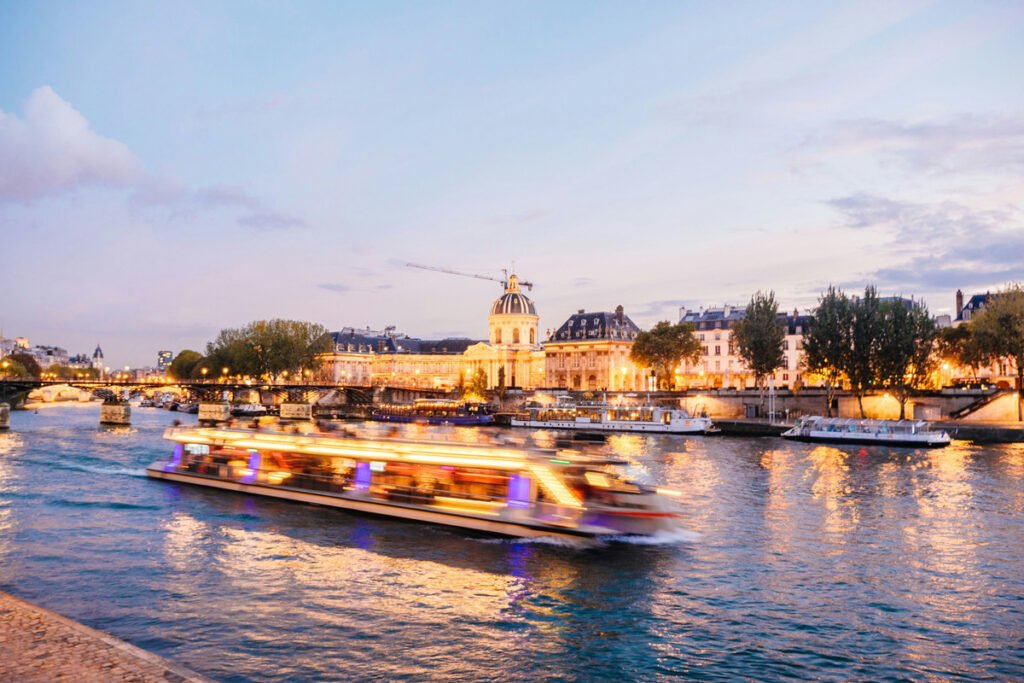
It only takes a few minutes browsing “senior travel” to spot a pattern emerging. Retirement travel is often presented as “premium” by default: fully-escorted, luxury hotels, upgraded cabins, private transfers, curated experiences, and a growing collection of supposedly essential travel gear — preferably lightweight, technical, elegant, and eye-wateringly expensive.
Even the language tells a story. Comfort. Seamless. Hassle-free. Exclusive.
None of these things are inherently wrong. For some travellers, they are genuinely worth paying for. But somewhere along the way, “senior travel” has quietly become shorthand for “upscale travel” — as though age automatically comes with a larger budget.
And that is where many women quietly fall out of the picture.
Of course, “expensive” is a relative term. To a woman on a fixed pension, a $380-a-night boutique hotel isn’t just a splurge; it’s a month’s worth of groceries. Yet to someone from a different background, that same rate might feel perfectly reasonable for a bit of comfort.
Budgeting isn’t a race to the bottom; it’s simply about recognising where your “reasonable” sits and refusing to be shamed if it doesn’t match the brochure.
None of this is to say that travel companies are the villains of the piece. They are, quite simply, in the business of making money. Selling premium experiences is a logical part of the industry, and there will always be travellers who are happy — and able — to pay for them.

The “Premium by Default” Trap
But it does raise a reasonable question: How often do we see genuinely affordable travel presented to retirees as an equally valid option?
Not “budget” in the sense of cutting corners, whistle-stop group tours with 49 other people, or sacrificing comfort. Simply realistic travel — sensible choices, independent planning, and trips designed around ordinary finances rather than assumed affluence.
Choosing to travel on a strict budget isn’t a sign of lack. Rather, it’s a strategic allocation of curiosity.
It’s certainly true that living costs have risen sharply.
- Many retirees are managing carefully on fixed incomes or pensions.
- A lot of women retire with less superannuation after years of lower earning, part-time work, caregiving, or interrupted careers.
- Some are widowed, divorced, or travelling independently on one income rather than two.
- Others are helping adult children, supporting grandchildren, or simply trying to keep everyday household costs under control.
That is ordinary life. And ordinary life doesn’t disappear the moment you start browsing flights to Europe.
Yet much of the travel industry still seems to assume that retirement automatically means more time, more freedom, and more money. Often it simply means making more careful decisions.
That matters, because the travel industry message is subtle but powerful: If you cannot afford the upgraded version — the premium tour, the boutique hotel, the “must-have” gear — you begin to feel as though you are somehow doing travel incorrectly.
You are not.
For many women, travel in later life is not about luxury. It’s about resourcefulness, priorities, and making the numbers work well enough to keep going. It may not look glamorous, but it’s every bit as real. And often far more interesting.
Fear is Expensive
Most women aren’t afraid of travelling itself. They’re afraid of getting it wrong.
It’s not usually the destination that feels daunting. It’s the small, practical uncertainties that gather around the edges. Which train platform? What if the booking dates are wrong? What if the ticket app refuses to work? What if I get off at the wrong stop, get overcharged, or look completely lost?
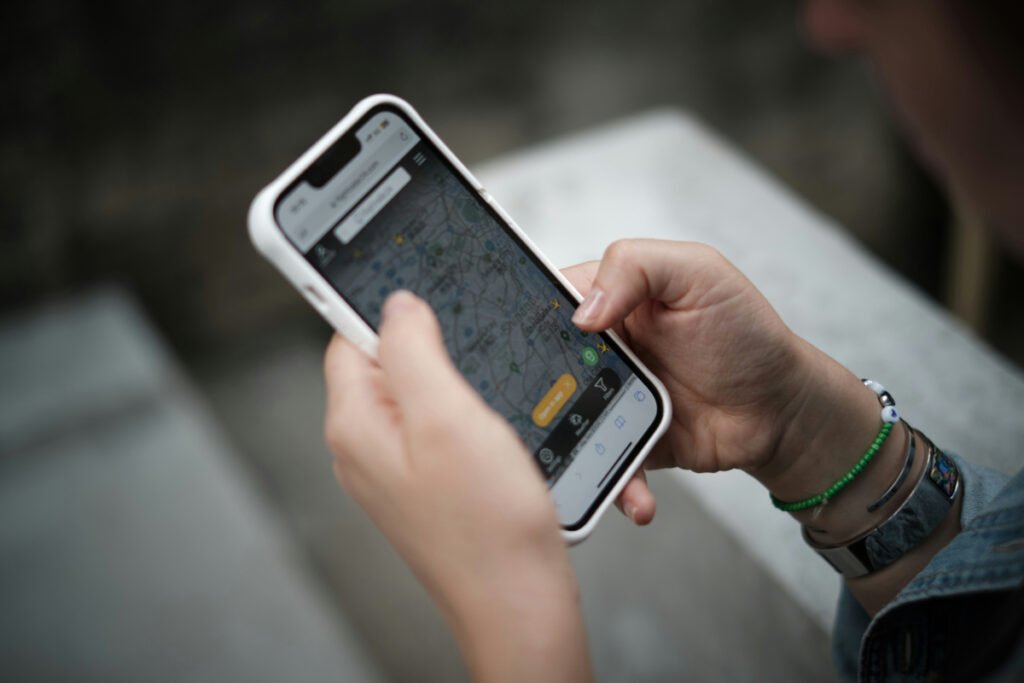
Then there are the small, prickly worries — arriving after dark, being stranded when plans unravel, navigating unfamiliar public transport, walking into a restaurant alone, or simply feeling conspicuously out of place.
And, if we’re honest, there’s also a fear of looking foolish.
Not because women over 60 are incapable. Quite the opposite. Most are highly competent, organised, and used to managing complicated lives. But travel often presents unfamiliar systems, unfamiliar rules, and the uncomfortable possibility of making mistakes in public.
Paying for Peace of Mind — and its Hidden Cost
The travel industry has built entire business models around removing uncertainty — at a price. They are subtly tapping into those fears.
Nevertheless, I openly admit that short escorted tours, private transfers, airport pickups, guided itineraries, or pre-arranged logistics can be genuinely useful from time to time. I use some of these myself at select times for various reasons — e.g. choosing an organised day tour to a place that would be difficult to reach under my own steam, or when the balance between cost and convenience make them worthwhile.
Furthermore, accessibility matters, too. For some women, organised travel removes barriers that might otherwise make a trip difficult or simply exhausting.
Not everyone wants the responsibility of independent travel. Which is perfectly reasonable.
But women are still often encouraged to outsource confidence before they’ve even had the chance to build it themselves.
Sometimes, the most expensive part of travel is not the ticket. It’s paying someone else to carry the uncertainty that, with a little preparation and experience, you are perfectly capable of carrying yourself.
What Real Budget Travel for Women Over 60 Actually Looks Like
Most independent travellers I know are not living extravagantly. They’re simply prioritising “experiences” over “appearances”.

Real budget travel in later life often doesn’t look particularly glamorous. It sometimes means travelling a little slower, embracing the occasional compromise, staying longer in one place, and making deliberate choices about where comfort and convenience matter — and where they most certainly don’t.
“Luxury” often acts as a buffer between the traveller and the destination. “Independence” removes the filter.
There is a quiet liberation in having a “sensible” budget. When you aren’t paying for the sanitised, seamless experience, you’re forced to engage with the world. You talk to the local shopkeeper because you’re buying your own lunch, not just nodding at a waiter in a private dining room. You find the hidden courtyard because you took a scenic wrong turn at the station.
This is how many ordinary women make travel possible.
And that is the part most travel marketing conveniently misses. Budget travel is more about establishing priorities than deprivation.
Real travel for ordinary women is often less polished than the brochures suggest. But in my experience, it’s usually far more interesting and memorable.
For a more detailed look at budget travel for women over 60, check out my recent article 7 Secrets to Travelling in Retirement on a Budget (See the World on a Fixed Income).
You Do Not Need a Luxury Version of Everything
Some travel content makes it sound as though a woman cannot possibly survive a two-week trip without merino wool layers, compression cubes, RFID-blocking technology, and a suitcase worth more than the airfare.
Nevertheless, good equipment can make travel easier. A reliable suitcase, comfortable shoes, a practical and roomy day bag, and a few well-chosen tech essentials can be money well spent — especially if they’ll be used for years.
But if we’re not careful, sensible preparation can quickly turn into the idea that every trip requires a specialised travel wardrobe, endless accessories, anti-theft everything, and a growing list of “senior-friendly” upgrades.
Often it doesn’t.
Most experienced travellers I know are not carrying half the shop with them. They’ve simply worked out what they genuinely need, what makes life easier, and what can safely stay at home.
A useful rule of thumb is this: use what you already have; and buy for comfort, practicality, and reliability — not because clever marketing has convinced you that travel has become impossible without the premium version of everything.
The Confidence Gap
By the time many women reach their 60s and beyond, they’ve already spent decades solving problems, adapting to change, managing logistics, and dealing with the unexpected. Those are travel skills — even if nobody has ever labelled them that way.
For those returning to independent travel after a long break, the realisation is often the same: confidence isn’t a prerequisite; it’s a result.
Growth is quiet, consistent, and incremental — sorting out a booking mistake or realising you forgot to arrange a transfer but fixed the problem anyway. Every independent traveller occasionally gets lost or misreads a timetable. Yet, usually to our own surprise, we discover that the days carry on perfectly well.
In fact, the trips people remember most clearly are often not the ones where everything ran like clockwork. They’re the ones where something went spectacularly wrong yet you worked your way through it, and years later, it’s the story you tell over dinner.
Confidence doesn’t require heroic adventures. It grows through repetition — booking your own flights and accommodation, navigating a complex train network, or ordering dinner for one. Experienced travellers still miss trains and end up in the wrong place (I’ve done all of these things, occasionally in the same day!). The difference is simply that they no longer mistake inconvenience for disaster.
Independent travel is not an innate talent. It’s a practical skill. And like most practical skills, it can be learned. And it becomes easier the more often you use it.
So now, it’s time we reclaimed the horizon.
Travel Belongs to Ordinary People, Too
Perhaps the most misleading idea in modern travel is not that travel has become expensive. It’s the more subtle suggestion that meaningful travel now belongs mainly to people who can afford the polished version of it.
That’s worth questioning.
For most of history, people travelled the world with imperfect plans, limited means, ordinary luggage, and a fair amount of uncertainty. They travelled because they were curious, because they wanted to see what was beyond the horizon, or simply because they had decided that going mattered more than waiting for ideal conditions.
That has not changed.
And neither does turning sixty suddenly make a woman incapable of reading a train timetable, booking a hotel, finding a platform, or navigating an unfamiliar city.
Yes, some people have physical limitations, health concerns, or accessibility needs that make organised travel the right choice. That’s an important point to make.
But for the rest of us, getting older should not automatically mean handing over responsibility, judgement , and confidence to somebody else.
That idea deserves more challenge than it usually gets.
The skills that make independent travel possible — planning, problem-solving, adaptability, common sense, resilience — are not youthful gifts. They are often the very things women have spent a lifetime developing.
So, perhaps the question is not whether you are capable of travelling independently.
Perhaps the better question is: “Who persuaded so many women that they were not?“
Related Posts
- 7 Secrets to Travelling in Retirement on a Budget (See the World on a Fixed Income)
- Returning to Solo Travel After 60: How to Start Again With Confidence
- How to Plan Independent Travel After 60 (Without Feeling Overwhelmed)
- Independent Travel vs Group Tours: How to Decide What Suits You
Leave a Reply