If you’re planning a getaway to the cobblestoned streets of Rome or the fjords of Norway this year, you might have heard some buzz about the new Europe travel rules called EES and ETIAS. While they might sound a little intimidating, they’re designed to make Europe’s borders more secure and faster to pass through.
EES and ETIAS apply to travellers from visa-exempt, non-EU countries (such as the UK, US, Canada, and Australia) who are visiting countries within the European Union and Schengen Area.
Here’s a simple breakdown of what you need to know before your next European adventure.
The Entry/Exit System (EES)
Status: Rolling out now, with full implementation by April 10, 2026.
The EES is essentially a digital replacement for the old-fashioned passport stamp. Instead of a border officer hunting for a blank page in your passport to stamp, your entry and exit are recorded electronically.
- Who it’s for: All non-EU travellers (including those from the UK, US, Canada, and Australia) visiting for a short stay in Europe or Schengen Area countries.
- The Cost: EES is free (it’s different from ETIAS, which does have a fee — see below).
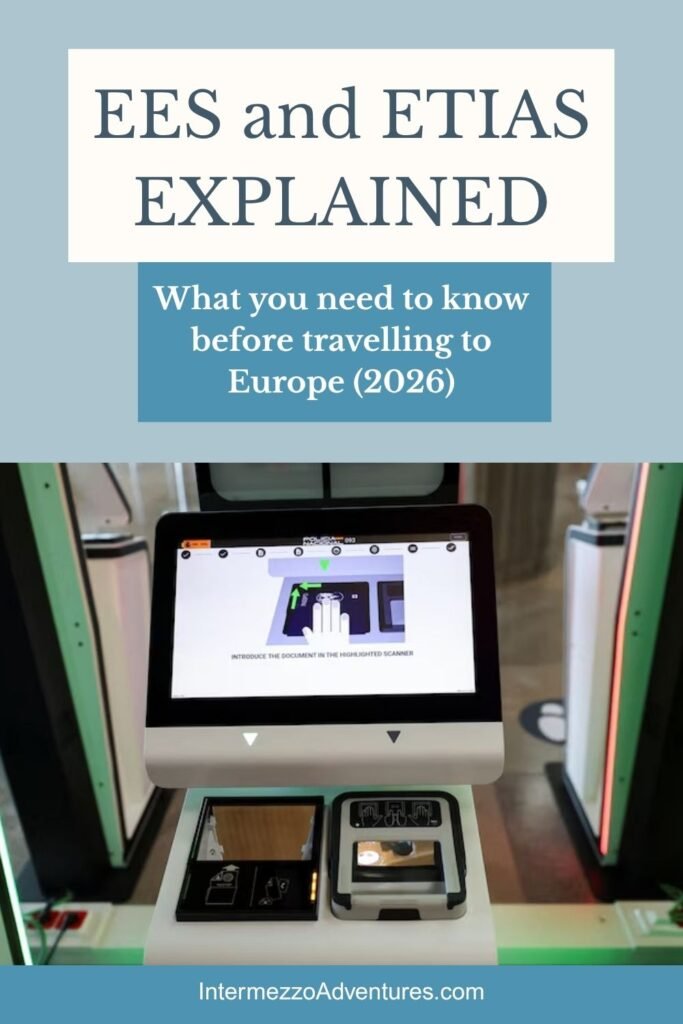
- What happens at the border? You’ll provide biometric data — typically a quick facial scan and digital fingerprints.
- How long does it last? Your details are stored in the system for future trips for up to 3 years, so you won’t need to re-register every time you enter the EU. After this — or if you renew your passport — you’ll need to re-register.
- The “Travel to Europe” App: To save time, you can download the official “Travel to Europe” app. It allows you to pre-register your passport and photo up to 72 hours before you arrive, making the airport process much smoother.

The European Travel Information and Authorisation System (ETIAS)
Status: Expected to start in late 2026 (estimated from October).
While EES happens at the border, ETIAS is something you do before you leave home. Think of it like a pre-trip essential check-in.
- Who it’s for: Travellers from visa-exempt countries (like the UK, US, Canada, and Australia) visiting for a short stay in Europe or Schengen Area countries.
- The Cost: The official fee is (currently) €20 for adults. ETIAS is free for travellers under 18 and over 70. You’ll still need to register, but the fee is waived.
- How long does it las? Once approved, your ETIAS is valid for 3 years (or until your passport expires) and can be used for multiple entries. You don’t need to apply again for each EU or Schengen Area country you visit during that period.
- When do I need it? You won’t need ETIAS until the launch in the final months of 2026 (estimated from October).
Official Resources: Where to Go for the Latest EES and ETIAS Info
To avoid unofficial sites charging extra “service fees”, always use the official European Union portal for information about EES and ETIAS:
- Official Website: https://travel-europe.europa.eu
- Specific EES Info: https://travel-europe.europa.eu/ees
- Specific ETIAS Info: https://travel-europe.europa.eu/etias
- The Mobile App: Look for the “Travel to Europe” app on the Apple App Store or Google Play. This is the official EU app designed to help you pre-register before arrival.
EES and ETIAS Travel Tip:
While I strive to keep Intermezzo Adventures as up-to-date as possible, travel regulations can change at the drop of a hat. To ensure you have the most current information, always verify details via the official EU Travel Europe website.
Why You Should Steer Clear of Unofficial Sites
- Hidden Costs: Once ETIAS goes live, unofficial sites may add a “service fee”. Instead of just paying the initial €20, travellers might end up paying €50 (or more) for the same thing.
- The Over-70 Benefit: Private sites sometimes don’t emphasise that the fee is waived for seniors over 70. They might charge you their “processing fee” anyway, even though the official EU site wouldn’t have charged a cent.
- Data Security: While many unofficial sites are legitimate businesses, it’s always safer to give your personal details directly via the official EU domain.

The Bottom Line on EES and ETIAS
If you are travelling to Europe during the 2026 northern spring and summer, you only need to prepare for EES (at the time I’m writing this). Be prepared for a quick photo and fingerprint scan when you land.
You don’t need to apply for anything else or pay any new fees until ETIAS launches around October 2026.
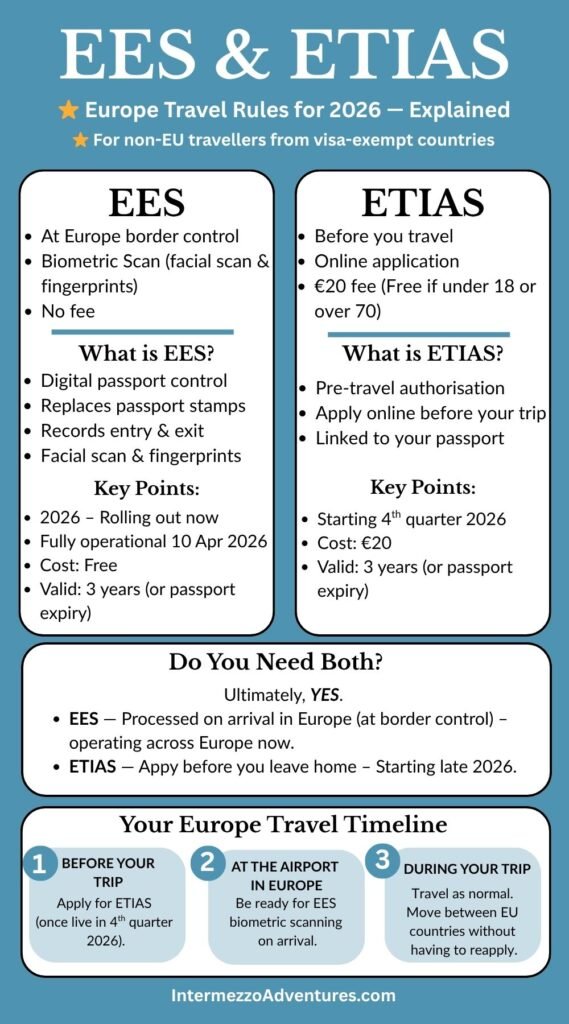
Prefer a quick overview?
Here’s a simple visual guide you can download and keep.
A Personal Note from My Recent Travels
I know the words “biometric data” and “digital border” can sound a bit daunting, but I want to reassure you. I travelled to Denmark just days after the EES rollout began last year. I’m happy to report that I had no problems whatsoever. There was a very short queue at immigration control — I waited no more than 10 minutes — while the new system was processed.
My advice? Don’t let the new tech worry you; just give yourself an extra 15 minutes buffer time at the airport and keep your friendly traveller’s smile ready.
You Might Also Find Helpful
- If Copenhagen is on your itinerary, you might also enjoy my self-guided Copenhagen walking itinerary. Or is journeying beyond Copenhagen, check out my useful guide to the delightful seaside town of Hirtshals on Denmark’s northern coast.
- If you’re returning to solo travel and it’s been a while since you last trip, my “Go Solo” book may help you travel with confidence.
- For a practical strategy for planning your next adventure, my Complete Travel Planner takes you from dreaming about where to go, right up to departure day. It ensures you’ll be fully prepared and confident.

Leave a Reply