When you’re trying to decide what to book first when planning a trip, the process should feel like the opening chapter of an adventure, not a second job in logistics.
I know the drill: you sit down with a fresh browser tab, your heart set on somewhere, but before you’ve even typed “flights” into the search bar, that familiar overwhelm sets in. It’s easy to feel as though every decision — flights, hotels, museums, day tours, airport transfers — must be organised simultaneously to keep the whole thing from collapsing.
Let me save you the palpitations: you don’t need to do it all at once. In fact, you really shouldn’t.
Travel planning for women over 60 is far more effective — and significantly more enjoyable — when you stop trying to wrestle the entire itinerary into shape on day one. By treating your bookings like a series of logical layers, you can build a framework that is secure enough to provide peace of mind, but flexible enough to let you actually enjoy the journey.
This method begins with the Anchors (the heavy lifters), moves to the Protections (the smart safeguards), and finally, to the Refinements (the fun stuff). It’s a structure that keeps you organised without turning your holiday into a rigid performance.
Ready to build your trip without stress? Let’s start with the anchors.
What to Book First When Planning a Trip
Affiliate Disclosure: Some of the links on this page are affiliate links. This means I may receive a small commission (at no further expense to you) if you click through and make a purchase. Learn more.
Layer 1: The Anchors (Flights & Bed)
Think of your trip as if you’re building a house. If you start by picking out the curtains (day tours) and the throw pillows (restaurant reservations) before you’ve poured the concrete (flights and accommodation), you’re going to end up with a pretty, but structurally unsound, mess.
Your “Anchors” are the only things that truly matter in the beginning. They turn a nebulous “I’d love to visit Italy” into “I’m going to Italy on 14th of October”.

Flights: Establishing the “When”
Flights dictate everything. They mark your arrival and departure, your time zone adjustment, and the start of your freedom.
- If you’re DIY-ing your flight bookings: Don’t obsess over chasing the “perfect” fare. Unless you’re a professional stock trader, trying to time the market to the penny usually just leads to extra grey hairs. Aim for a sensible price, a reliable airline, and an arrival time that doesn’t require you to navigate a new city at 3:00 AM.
- If you’re joining a group tour or cruise: This is your golden rule: Don’t touch the flights button until you’ve paid the tour deposit. Secure your spot on the tour first. Once those dates are set in stone, you can book your flights around them.
- The Buffer Strategy: If you’re flying long-haul, consider arriving a day or two early. Spending your first night in a hotel before the tour starts gives you a cushion for flight delays and a chance to let your internal clock catch up before the group itinerary kicks off.
Accommodation: Choosing Your Travel Base

Once those dates are locked in, secure your “home” base. When considering what to book first when planning a trip, your accommodation is far more than just a place to sleep: it’s your command centre.
- Location Matters More Than Luxury: I’d take a modest room in a central neighbourhood over a luxury suite forty minutes away any day. Being able to walk to a morning coffee, or drop your shopping bags off mid-afternoon without a two-hour commute, changes your entire experience in the city.
- Choose by Vibe, Not Just Price: Hotels are great for the “I don’t want to think about anything” energy. Apartments are wonderful if you want the freedom to make a pot of tea and eat a local cheese at your kitchen table.
- Prioritise Convenience from Day One: From the moment you land, aim to stay in a central, well-connected location that’s easily accessible from the airport or train station. Settling into your “home base” straight away allows you to drop your bags, freshen up, and start exploring. Start where you mean to stay; you’ll thank yourself for the simplicity.
By locking in just these few things, you’ve essentially built the foundations of your trip. Everything else? It’s just decorating. And frankly, the decorating is much more fun when the foundations and walls are standing.
Still trying to decide where to go? Choosing the right destination makes the planning and booking process much easier. You may enjoy reading Your First Solo Trip After 60: Choosing a Destination.
Layer 2: The Protections (the Safety Net)
Once your flights and accommodation (and any major group tour or cruise bookings) are sorted, you’ve done the heavy lifting. The trip is officially real. Now, it’s time for the part of planning that feels a little less glamorous, but it arguably the most important: the protections.
Think of this phase as your peace of mind insurance. It’s not about anticipating disasters — it’s about knowing you’re prepared. This way, you can stop worrying and start looking forward to your departure date.
Travel Insurance: The “Just In Case”
I know, nobody sits around a Sunday lunch discussing insurance policies. It’s definitely not the stuff of travel dreams. But it is the stuff of travel realities.
- Don’t treat it as an afterthought: The golden rule is to buy travel insurance the moment you’ve booked the foundations. Why? Because the most expensive part of your trip often happens before you even zip up your suitcase — like having to cancel because of a sudden health issue or family emergency.
- Prioritise coverage, not cost: You don’t need a policy that covers a lost sock in Timbuktu, but you do need one that covers medical emergencies, and, crucially, pre-existing health conditions. Solo travel after 60 shouldn’t be a gamble; take the ten minutes to call the provider to ensure your health history is properly disclosed. It’s tedious, yet, but it’s the difference between a minor hiccup and a major bill.
Key Transport: Ending the “Arrival Anxiety”
There is a specific type of stress that comes from landing in a foreign country, tired, disoriented, and having no idea how to get to your hotel.
- The Arrival Transfer: If you are travelling solo, treat yourself to a pre-booked airport transfer. Whether it’s a private driver, a taxi, or a shuttle service, knowing there is someone standing there with a sign is priceless. Alternatively, knowing which train to board without struggling with a ticket machine in a different language is worth every cent.
- The “Big” Connections: You don’t need to book every bus and tram months in advance, but if your trip includes a cross-country train, a ferry between islands, or a regional flight, get these locked in. It’s the difference between a calm journey and a frantic scramble.

The Boring (But Vital) Admin
There are a few “un-fun” things that can ruin a trip before it starts if they’re not attended to. Save yourself the panic by checking these off now:
- Passport Check: Does it have at least six months’ validity left? Some countries are notoriously strict about this. Check it tonight.
- Entry Documents: Check visa requirements and mandatory digital entry/immigrations forms for your destination. Many countries now require these to be submitted online days or weeks in advance.
- The Health Prep: If you’re heading somewhere new, have a quick chat with your GP about necessary vaccinations or managing your usual medications while travelling.
- The Bank Notice: Inform your bank of your travel dates. Nothing puts a damper on a gelato-fuelled afternoon like having your card frozen because your bank thinks it’s being used by a fraudster in Venice.
- Mobile Data: Don’t wait until you land to figure out your phone connection. Arrange an eSIM, a local SIM card, or an international roaming plan before you leave. Having access to maps and translation apps the moment you step off the plane is a game-changer.
- Car Hire: If your trip requires a vehicle, book it early. Availability in rural or regional areas can disappear during peak seasons, and last-minute rentals are rarely a bargain. And don’t forget to check if you need an International Driver’s Licence.

Layer 3: The Refinements (the “Cherry on Top”)
Now that you’ve poured the concrete and secured the perimeter, you’re ready for the fun part: the refinements. This is where you pick the exhibitions, the special meals, the day tours, and the unique activities that turn a trip into a collection of memories.
Many travellers make the mistake of doing this first. They start with a Pinterest board of “must-see” sights, only to realise later that the stately home they’re dying to visit is on the complete opposite side of the city from their hotel.
Book What You Can’t Live Without
If there’s an iconic site, specific show, or a guided tour that is an absolute “must-do”, don’t leave it to chance.
- The “One Main Activity Per Day” Rule: To avoid turning your holiday into an obstacle course, try to stick to one must-book activity per day. This leaves the rest of the day open for serendipity: the hidden courtyard, the unexpected evening river cruise, or just sitting at a café.
- Small-Group Tours: If you’re travelling solo or just want a bit of company for a day, look for small-group day tours. They offer a nice bridge between total independence and having someone else handle the logistics for a few hours.
Keep the “Maybe” Pile
Not everything needs an advance reservation. In fact, if your itinerary is packed from 8:00 AM to 8:00 PM every single day, you’ll likely be too exhausted to enjoy any of it.
- The “Maybe” Activities: On any trip, it’s unlikely you’ll see everything, and it’s unwise to even try. After your “must-do” activities, keep a list to “would be nice if there’s time” activities, too. These are the ones you can slot in or pivot to as needed.
- Free time: I always leave a few free afternoons. If you discover a local festival or market, you have the breathing room to pivot.
- Spontaneity is a choice: You’ve done the hard work of anchoring and protecting your trip. That foundation gives you the freedom to be as spontaneous — or as lazy — as you like.
The Final Step: Turning Your Plan Into Peace of Mind
By now, you’ve built your trip from the ground up. You’ve anchored your travel dates, protected your investment with smart safeguards, and fine-tuned your itinerary. But there is one final, often overlooked, hurdle: the paperwork avalanche.
Trying to track receipts and vouchers across different apps is a surefire way to turn a relaxing pre-trip buzz into last-minute anxiety. The secret to actually enjoying your trip is being able to access what you need, when you need it, without digging through your phone for ten minutes.
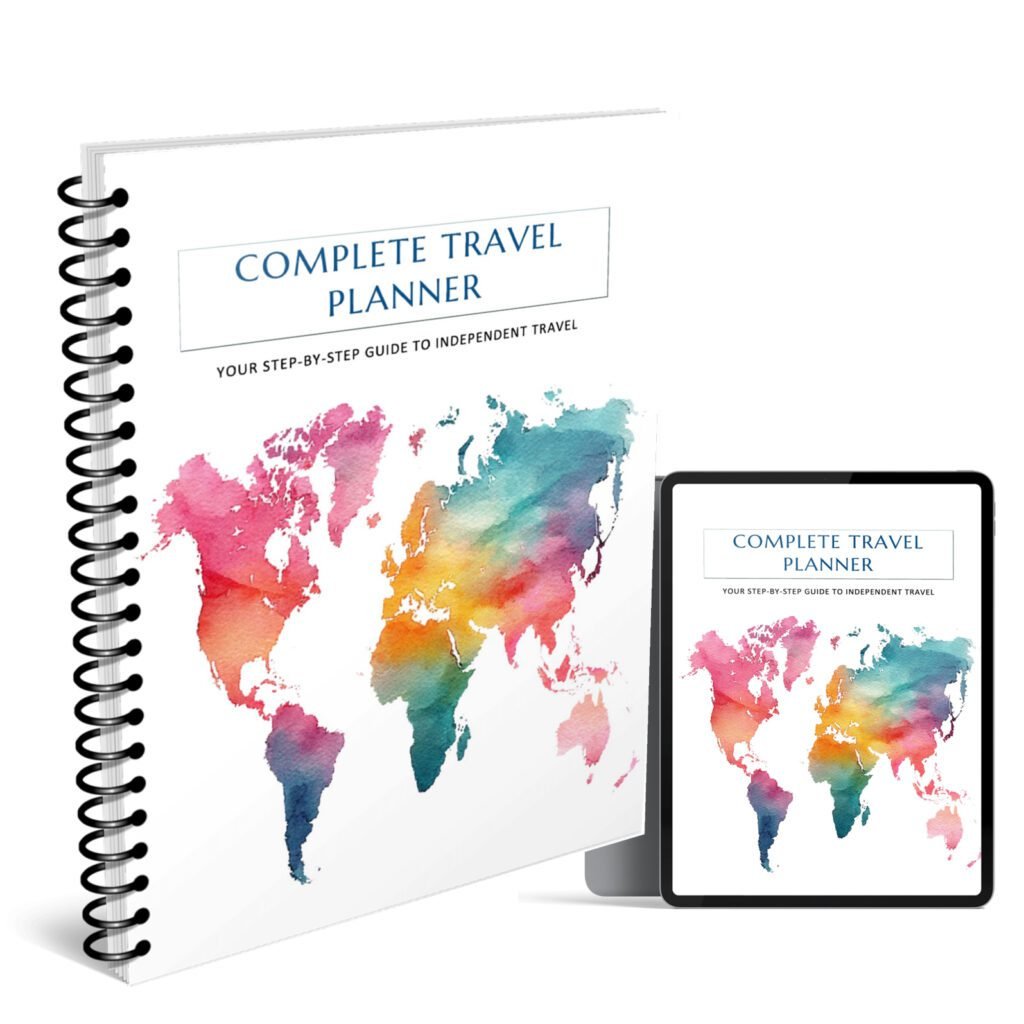
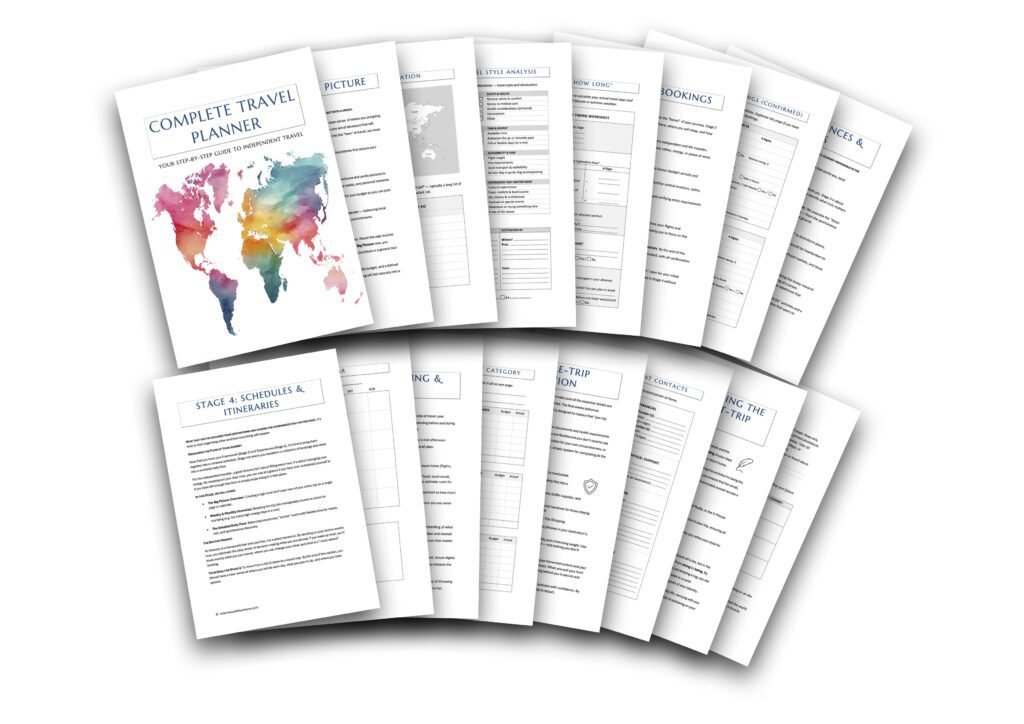
If you prefer a clear, independent travel structure, you’re going to love my Complete Travel Planner. I designed it specifically for women who value clarity as much as they value the adventure itself. It’s a dedicated “command centre” where you can gather all these layers of planning in one tidy, accessible place.
The “Logical Booking” Quick-Start Checklist
Use these timeframes to help keep your step-by-step planning on track.
Layer 1: The Anchors
- Lock in your dates: Book flights, accommodation, and major tour deposits: International: 4-9 months ahead; Domestic: 1-3 months ahead.
Layer 2: The Protections
- Insure it: Purchase travel insurance immediately after your first deposit.
- Sort the arrival: Pre-book your transfer or know which train to catch (1 month before departure).
- The Boring Essentials: Check Passport/Visa (6 months ahead); Mobile Data and Bank (1-2 weeks ahead); and Car Hire (2-4 months ahead).
Layer 3: The Refinements
- The “Must-Dos”: Book iconic sites, shows, or popular day tours that might book out (1-3 months ahead).
- The “Maybe” Pile: Identify sites and activities you’d like to see but leave them unbooked.
- The Calendar Check: Ensure you have at least one “slow” afternoon every few days.
Frequently Asked Questions (FAQ)
- Is it always cheaper to book flights months in advance? Generally, yes. For international travel, “last-minute” deals are rare these days. For domestic flights, booking 1-3 months ahead is the sweet spot for both price and sanity.
- Should I book my accommodation before my flights? Unless you’re travelling for a high-demand event like the Olympics or a conference, always book your flights first. It’s easier to find a hotel to fit your dates than vice versa.
- What if I’m nervous about booking so far in advance? This is why the “Protections” layer is vital. Choose flights offering “flexible” options and accommodation with refundable rates or free cancellation. And purchase travel insurance with cancellation cover so you can book with confidence.
Next Steps
- Need help choosing where to go? Start by reading Your First Solo Trip After 60: Choosing a Destination.
- Returning after a long break? Read Returning to Solo Travel After 60: How to Start Again With Confidence.
- Want to see a full planning planning framework? Check out How to Plan Independent Travel After 60.
- When you’re ready, the Complete Travel Planner offers a comprehensive, step-by-step structure and workbook to take your travel plans from first idea to departure day.
Leave a Reply