If you’re wondering how to plan independent travel after 60 without feeling overwhelmed, the key is breaking the process into manageable steps.
For many women, travel begins to feel different at this stage of life. Independent travel after 60 can feel quietly intimidating — not because the desire (or the ability) — has disappeared, but because the logistics seem more complicated than they once did.
You might find yourself browsing destinations online with genuine interest, and then hesitating when it comes to organising the trip yourself. There are more rules than there used to be. More booking platforms. More decisions to make.
And somewhere in the background, a few practical concerns surface:
“Can I still manage all this myself?”
“What if I overlook something important?”
“Will my dodgy knees cope with long airport corridors or cobbled streets?”
If that sounds familiar, you’re not alone.
Hesitation at this stage isn’t about a lack of capability. It’s usually about structure. When everything feels like it needs attention at once, planning becomes a mental tangle.
Independent travel after 60 isn’t about being fearless. It’s about approaching the process in a way that makes sense — with order, preparation, and realistic expectations.
Let’s break it down into something entirely manageable.
How to Plan Independent Travel After 60
- Why Planning Can Feel Harder Now
- Step 1: Start With the Trip You Can Manage Comfortably
- Step 2: Break the Planning Into Stages
- Step 3: Allow More Time Than You Used To
- Step 4: Plan for Comfort — Not Endurance
- Step 5: Prepare for Small Problems (Because They Happen)
- Step 6: Trust the Skills You Already Have
- The Truth About Independent Travel After 60
- Would You Like a Structured Planning Framework?
Affiliate Disclosure: Some of the links on this page are affiliate links. This means I may receive a small commission (at no further expense to you) if you click through and make a purchase. Learn more.
Why Planning Can Feel Harder Now
It’s not your age that creates overwhelm. It’s modern travel.
There are more booking platforms, more entry requirements, more apps, and more opinions. A simple trip can feel buried under layers of information.
And if you’ve had a break from travel — perhaps due to family responsibilities, caring for parents, health interruptions, or simply “life” — that planning “muscle” can feel rusty.
That’s normal.
The solution isn’t to avoid independent travel. It’s to approach it methodically.
Step 1: Start With the Trip You Can Manage Comfortably
One of the most common mistakes I see is trying to prove something.
Instead of thinking: “I must go somewhere ambitious or challenging,” ask yourself, “Where can I go that will be manageable and genuinely interests me?”
Look for destinations that:
- Have good public transport
- Are easy to navigate
- Offer reliable infrastructure
- Feel culturally accessible
- Suit your current energy level
This is about building confidence through positive experiences — not impressing anyone. A well-planned, manageable trip is far more empowering than an exhausting one.
Step 2: Break the Planning Into Stages
Overwhelm happens when everything feels urgent at once.
Rather than trying to organise it all in a burst of energy, divide your planning into well-spaced stages over several weeks.
Stage One — The Big Picture
Decide where you’re going, roughly when, and what you’re comfortable spending.
Stage Two — Core Bookings
Secure flights, accommodation, visas, and travel insurance. Once these are in place, the trip begins to feel settled and tangible.
Research visa requirements carefully (especially now), along with airport transfers, local transport passes, and any advance tickets you may need. If you’re unsure where to begin, here’s why you shouldn’t rely on a quick Google search alone when checking visa requirements for your destination.
Stage Three — Experiences (How you’ll fill your days)
Having a clear overview of your trip is important, but what makes a journey memorable is the experiences you choose along the way. It’s worth spending a little time researching your “Must-Do’s” vs your “Maybe-Do’s” — those experiences you’d be heartbroken to miss, versus the ones that would be nice if you have the time.
Stage Four — Schedules and Itineraries
This is where to start organising when and how all your activities will happen. For the independent traveller, a good itinerary isn’t about filling every hour, or booking everything in advance; it’s about managing your energy and interests.
Any popular, must-do activities can be pre-booked in advance. But remember, a good itinerary should always leave space for changing your mind and free time.
A good itinerary should set you free, not be a prison sentence!
Stage Five — Budgeting and Money
Wouldn’t it be wonderful if we didn’t have to think about money when planning a trip? However, the reality for most of us is that’s just a fanciful dream.
Spend time planning how you’ll manage your expenses and spending before and during your trip. After all, by clarifying your budget before leaving home, you can enjoy a mid-afternoon cocktail or a high-quality souvenir knowing exactly where it fits in your overall plan.
Stage Six — Pre-Trip Preparation
This is where you make sure all the essential details are taken care of so you can travel with confidence and peace of mind.
Organise documents, consider packing, check medication and vaccination requirements, and ensure copies of important information are stored safely.
When you treat planning as a sequence rather than a jumble of tasks, it becomes far more manageable.
If you’re unsure where planning sometimes goes wrong, I’ve outlined the most common solo travel planning mistakes — and how to avoid them.
Step 3: Allow More Time Than You Used To
In earlier decades, you may have planned quickly and dashed off on a high octane trip without much thought.
Now, give yourself the gift of time — not because you’re slower, but because you’re wiser.
Spacing tasks over several week reduces mental pressure and allows you to double-check details. It also gives you space to pause, reconsider, and adjust.
Something as simple as a written checklist makes an enormous difference.
Planning in stages doesn’t remove spontaneity — it protects it. I’ve written more about that balance in how to plan a solo trip without killing the joy of discovery.
Step 4: Plan for Comfort — Not Endurance
Independent travel after 60 isn’t about squeezing in everything. It’s about enjoying where you are.
- Choose accommodation close to transport.
- Schedule lighter days between busy ones.
- Allow recovery time after long flights.
- Avoid back-to-back early starts.
- Aim to arrive at your destination during daylight hours, where possible.
Pace matters. Build in some breathing room. You’re not twenty-five (and that perspective is a strength).
Step 5: Prepare for Small Problems (Because They Happen)
Even experienced travellers encounter hiccups — delayed flights, unexpected closures, a minor stomach upset, a card that refuses to work.
Confidence comes from knowing you can handle these situations.
Carry:
- Printed and digital copes of documents.
- Emergency contact numbers.
- A backup payment method and modest financial buffer.
- Travel insurance you understand.
- Any essential medications.
With these contingencies in place, anxiety dissipates significantly.
Step 6: Trust the Skills You Already Have
By 60, you’ve spent decades organising your household, managing finances, solving crises, navigating bureaucracy, and handling all life’s complexities.
Planning a trip is not beyond you.
It is simply another project — one that benefits from structure and forethought.
Independent travel after 60 about being prepared. And preparation builds confidence.
The Truth About Independent Travel After 60
You don’t need to travel like an influencer.
Or backpack for weeks (unless you genuinely want to).
There’s no need to “reinvent” yourself.
You simply need:
- A clear plan.
- A manageable pace.
- A practical itinerary.
Independent travel after 60 can be deeply satisfying — because it’s intentional, it’s your choice, and it’s entirely your own.
Would You Like a Structured Planning Framework?
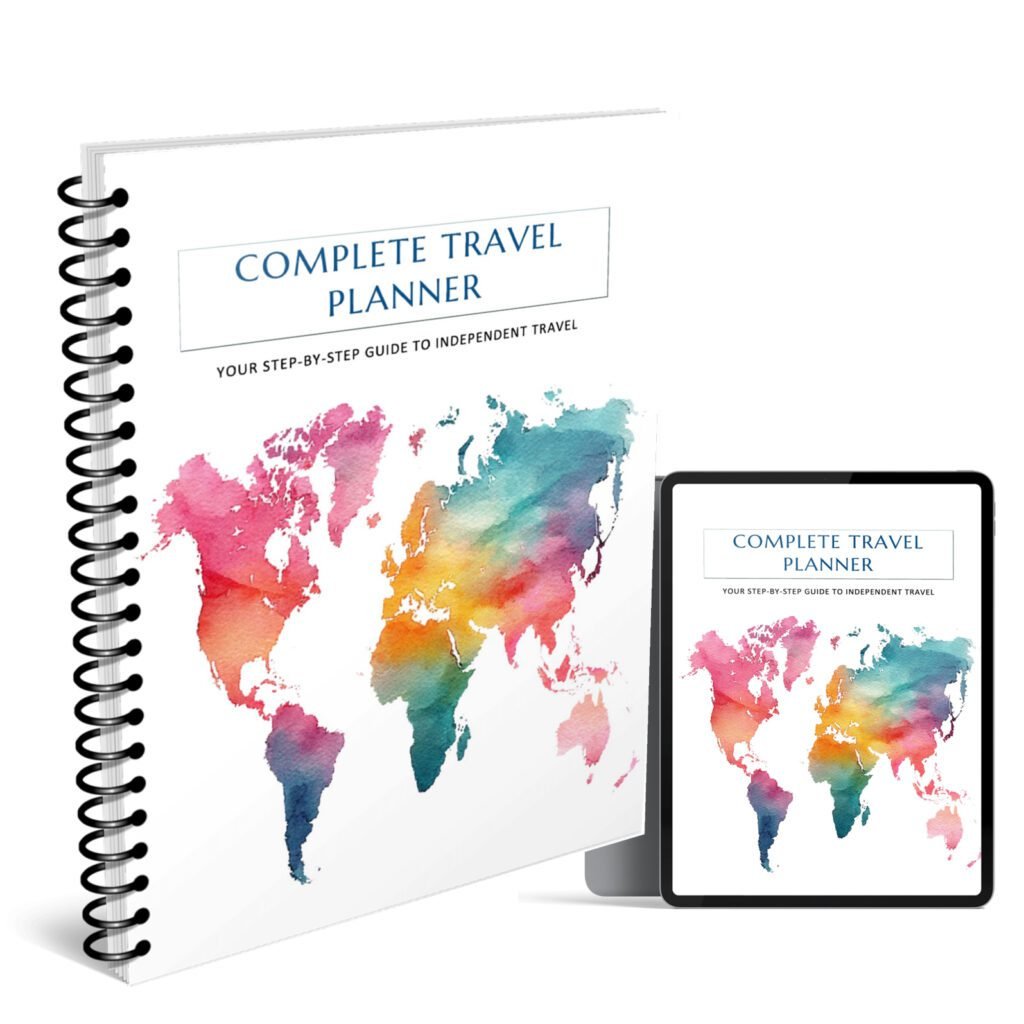
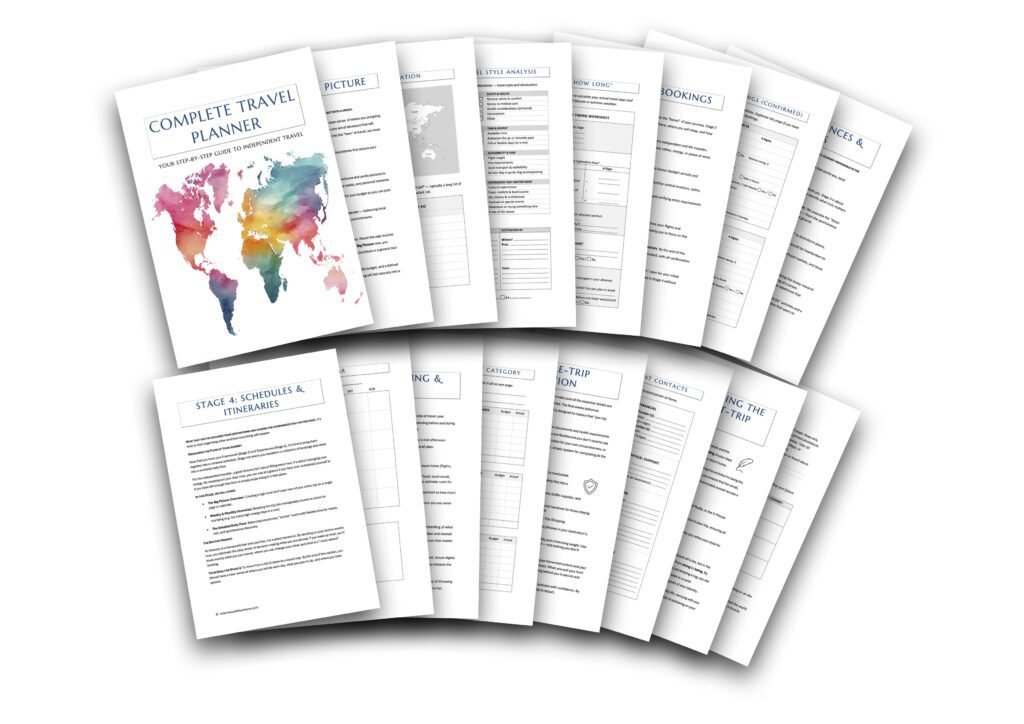
If you’d prefer not to piece everything together from scratch, my Complete Travel Planner walks you step-by-step from first idea to departure day.
It’s designed specifically for independent travellers who value order and preparation over last-minute scrambling.
This is not a rigid itinerary builder or a prescriptive “do it this way” system. It’s a comprehensive set of templates, planning guidelines, and worksheets that offers a practical framework you can adapt to your travel style, pace, and priorities.
Leave a Reply