After sharing my Singapore story across Parts 1 and 2 of Singapore, Unscripted, I wanted to offer something practical for anyone planning a trip of their own. This relaxed itinerary for six days in Singapore captures the essence of my journey with J — unhurried, flexible, and shaped by our interests, energy, and budgets, rather than ticking boxes.
Contents:
Affiliate Disclosure: Some of the links on this page are affiliate links. This means I may receive a small commission (at no further expense to you) if you click through and make a purchase. Learn more.
First Things First: Getting Around in Singapore
Arrival Card and Money Matters
Before you travel, don’t forget the Singapore Arrival Card — a simple (free) online form you complete before landing. It’s quick, easy, and now required for all visitors, replacing the old paper card system. Having it ready before you arrive makes immigration a breeze. Complete the form during the three days before arrival.
When it comes to money, Singapore is very card-friendly, and you’ll find that cash is rarely needed. Still, it’s useful to carry a small amount for things like hawker markets (who tend to prefer cash) or tiny purchases.
I always rely on a multi-currency card, which makes payments easy and avoids foreign transaction fees — my favourite is the Wise Card, which offers an extensive list of currencies, and works perfectly for both purchases and withdrawing a little cash when needed. Other cards include Revolut and Travelex (Australia).
Singapore Transport Options
Singapore is mostly a very walkable city, but it’s also modern, and extremely well connected, which makes getting around a breeze. Whether you’re arriving at Changi Airport or exploring the neighbourhoods, here’s what you need to know.
Arriving in Singapore
Most international flights land at Changi Airport — consistently rated one of the best airports in the world. From the airport to the city, you have a few options:
- MRT: The Mass Rapid Transit train runs directly from Changi to the city centre. It’s inexpensive, fast, and very easy to navigate.
- Taxi: Taxis are widely available, reliable, and air-conditioned (essential in Singapore’s heat!). A ride to the city centre usually takes 20-30 minutes, depending on traffic. Use an app such as Grab for convenience or head to one of the official taxi ranks, located in all terminals.
- Airport Shuttle or Private Transfer: Buses are convenient for groups, while private transfers are great if you have a lot of luggage, but more expensive. (Tip: try to travel light, with minimal luggage!)
Getting Around on the MRT
Once you’re in the city, the MRT is the backbone of transport. It’s clean, air-conditioned, and far simpler than it looks on the map. Here are a few tips:
- Tickets: You can buy single-journey tickets at machines in every station, or pick up a Singapore Tourist Pass for unlimited travel over 1, 2, or 3 days — a great option for short stays if you plan to use the MRT frequently.
- EZ-Link Cards: For longer stays, a rechargeable EZ-Link card works on MRT, buses, some taxis, and even some shops and attractions. Top-ups are easy at stations and convenience stores. (Tip: For a 6-day stay, I recommend buying an EZ-Link card)
- Navigation: Station signs and train maps are in English, and the apps are excellent for planning routes. Download the MyTransport.SG app to your phone for instant access to maps, routes, and timetables. Available free from Google and Apple app stores.
- Maps: Also download to your phone an offline map of Singapore from Google Maps — this ensures you always have access to live Google Maps, even if you’re offline.
Walking
Singapore is surprisingly pedestrian-friendly. Footpaths are mostly wide, crossings are well-signposted, and air-conditioned malls often connect to streets via sheltered walkways — very welcome on a hot, sunny day.
Taxis and ride-hailing
Taxis are plentiful and metered. Apps like Grab make it easy to book rides if you prefer to avoid hailing on the streets. They’re especially handy late at night or when you’re tired after a long day of wandering. If you’re arranging taxi transport from your hotel, simply ask at the reception desk to book it for you.
In short, getting around Singapore is stress-free. You can mix and match MRT, taxis, buses, and walking depending on your energy, the weather, and what’s nearby — leaving you free to enjoy the city without worrying about logistics.
Singapore Accommodation
Although generally regarded as an expensive city to visit, Singapore has accommodation to suit every taste and budget, from comfortable mid-range and high-end hotels to serviced apartments or AirBnBs. The key is to choose a base that’s comfortable, safe, and convenient — ideally close to an MRT station for easy access to the city’s main neighbourhoods.
Popular areas of Singapore for visitors include:
- Little India, with its vibrant streets and local markets
- Chinatown, full of heritage and colour
- Orchard Road, perfect if you enjoy shopping and modern city life
- Marina Bay and Boat Quay, close to iconic sights and the riverfront (though it can be more pricey)
J and I stayed at Hilton Gardens Inn Singapore Serangoon — a 4-star, mid-range hotel in Little India, just off Serangoon Road, which worked well for us. We loved having markets, temples, and cafes right on our doorstep, and getting around via the MRT made exploring the rest of the city effortless. Our hotel also offered a swimming pool and delicious breakfast, which made for a relaxing start to each day.
My Easy-Going Six Day Singapore Itinerary
Here’s a suggested itinerary for six days in Singapore. Whether you have five, six, or seven+ days, it’s intentionally flexible — swap days, skip sites, or stay longer where you like. The idea is to mix and match activities to suit your time, energy, and travel preferences.
Singapore is so easy to get around that, wherever you’re staying, each of these places is easily reached by MRT, taxi, or on foot.
>> Day 1 – Gardens by the Bay and Marina Bay Sands
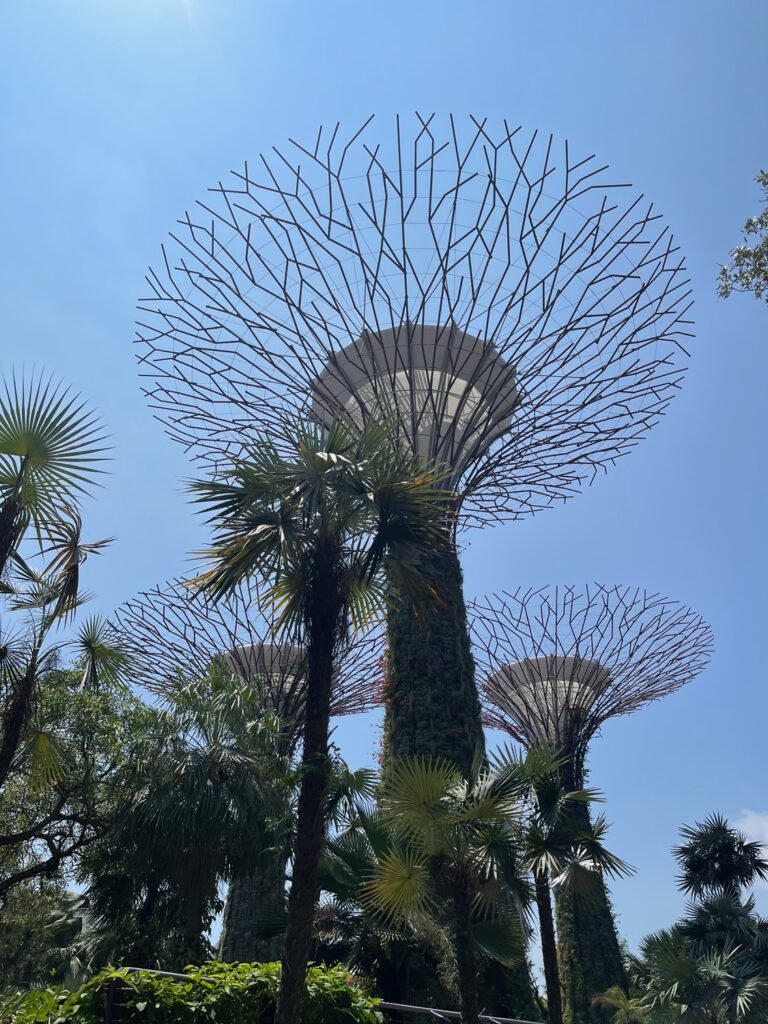
- Gardens by the Bay — Wander around the extensive garden areas and see the Supertrees (free during the day). Visit the Flower Dome and/or Cloud Forest Dome (paid entry). Have lunch or dinner at one of several restaurants and eateries located near the domes. It’s easy to spend either a half- or full-day here.
- Marina Bay Sands Hotel Skypark Observation Deck— Located adjacent to Gardens by the Bay, it’s logical to do both on the same day if you have the energy. Take the elevator up to the Observation Deck — the 360º view from the top is stunning. Although pricey, it’s worth every cent.
>> Day 2 – Little India and Kampong Gelam
There is so much to do in Little India and the nearby Kampong Gelam that it’s easy to spend many hours exploring the areas.
If you’re staying nearby, you can spread your visits over several days, just an hour or so at a time. Give yourself time to explore the side and back streets to uncover some hidden gems.
Little India:
- Temples in Little India — Visit the Sri Veeramakaliamman Temple or Sri Srinivasa Perumal Temple, both located along Serangoon Road. Entering both temples requires modest dress code, keeping your shoulders, arms and legs covered.
- Tekka Centre — join the throng and noisy chaos a this vibrant food court for lunch, dinner, or a snack. Sure, it’s a bit scruffy, but the wide variety of dishes on offer are delicious and inexpensive. Go upstairs to the Tekka Market for inexpensive Indian clothing. Buy “off the hook” or made-to-measure.
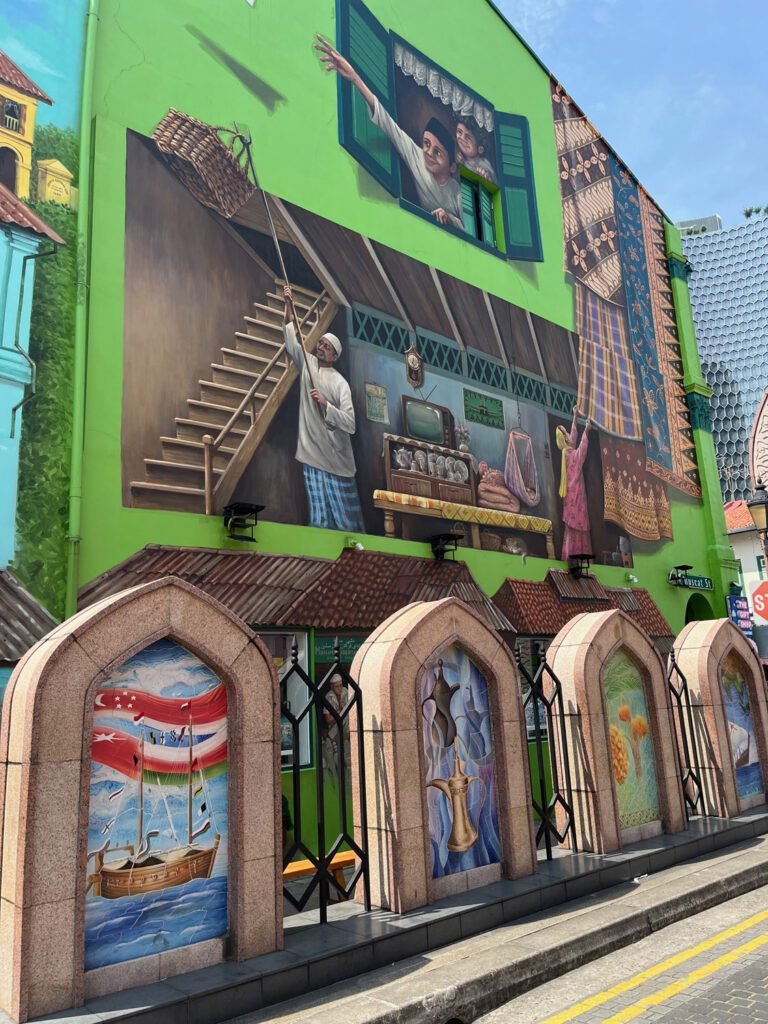
- Street Art and Shopping — Explore Little India’s back streets and alleys where you’ll find fabulous murals, street art, and interesting shopping options. The Mustafa Centre is worth a visit for Indian-style department store shopping.
- Jewellery Shops in Serangoon Road — If you’re looking for gold, this is the place to go, with dozens of outlets to choose from.
Kampong Gelam:
- Start your journey in Haji Lane, just a few minutes’ stroll from Bugis MRT station. Explore the small shops and boutiques, check out colourful murals, or stop in a café for refreshments.
- Visit the impressive Sultan Mosque, perhaps the most significant landmark in the area.
- Explore Arab Street and Bussorah Street for Persian rugs and traditional textiles.
- For a taste of history, visit the Malay Heritage Centre.
>> Day 3 – Singapore Chinatown, Fort Canning Park, and Lau Pa Sat
Chinatown
- Start by exploring the Chinatown street market — an area closed to vehicles, lined with stalls selling trinkets, gifts, fabric, and clothing. I recommend going in the afternoon or evening for a more vibrant atmosphere.
- Temples: Visit the Buddha Tooth Relic temple, the Sri Mariamman temple, the Thian Hock Keng temple, or the Al-Abrar Mosque.
- NUS Baba House: see a traditional shophouse, now restored and converted into a museum displaying Peranakan furniture and antiques.
Fort Canning Park
- Whether you want to learn more about Singapore’s history at the National Museum, take a selfie at the “Tree Tunnel”, or simply enjoy the peaceful, lush surroundings, Fort Canning Park is worth a visit. Walking around the beautiful grounds gives you an opportunity to relax and enjoy nature.
- Raffles Hotel: Stop by this iconic 5-star hotel for lunch or a Singapore Sling at the Long Bar.
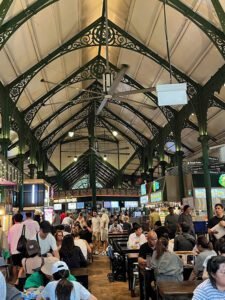
- In the evening, head downtown to Lau Pa Sat hawker centre to enjoy dinner, along with the building’s Victorian architecture.
>> Day 4 – Singapore Botanic Gardens and River Boat Cruise
Singapore Botanic Gardens
- Enjoy a couple of hours or an entire day wandering around the grounds of Singapore’s Botanic Gardens (free) — a UNESCO World Heritage Site. Don’t miss the National Orchid Garden (ticketed) — stunning!
- The gardens cover a vast area, comprising the National Orchid Garden, a Children’s Garden, Rainforest, Ginger Garden, Palm Valley, and more.
- Weekends can get very busy, so try to avoid the crowds by dropping in on a weekday.
Take a cruise on the SIngapore River
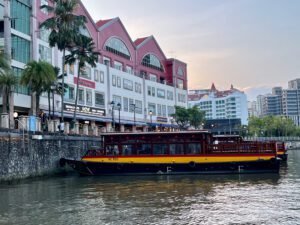
- Relax on a 40-minute river cruise on a traditional bumboat. See the sights along Marina Bay — Marina Bay Sands hotel, the Merlion, the Art Science Museum, restored shophouses, and the Esplanade, amongst others.
- Boats depart from Clarke Quay and Boat Quay. Purchase your tickets at ticket booths at the dock. Tickets can also be purchased in advance through agencies such as Get Your Guide, Viator, or Klook.
- Cruises run at regular intervals throughout the day and evening. This is a wonderful experience as the sun goes down on a balmy evening!
- Enjoy drinks or dinner before or after your cruise at one of the many restaurants in the immediate area. (Tip: Prices at these restaurants can be high)
>> Day 5 – Mandai Wildlife Reserve
Mandai Wildlife Reserve is a vast complex comprising five wildlife attractions.
- Singapore Zoo: An open-concept zoo featuring thousands of animals from around the world.
- Bird Paradise: Stunning walk-through aviaries housing thousands of bird species.
- Rainforest Wild ASIA: A wildlife adventure park — fabulous if visiting with kids.
- Night Safari: the world’s first nocturnal experiences park.
- River Wonders: Asia’s only river-themed park.
- Tickets: Single-entry and multi-entry tickets are available. If you want to visit more than one, plan your visits over several days. Explore all ticket options for the Singapore Zoos here.
- Getting There: To get to the reserves, take the train to Khatib MRT and jump on one of the dedicated shuttle buses that stop at each of the reserves. Use your EZ-Link card to pay for both.
>> Day 6 – Jewel at Changi Airport
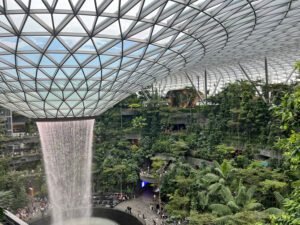
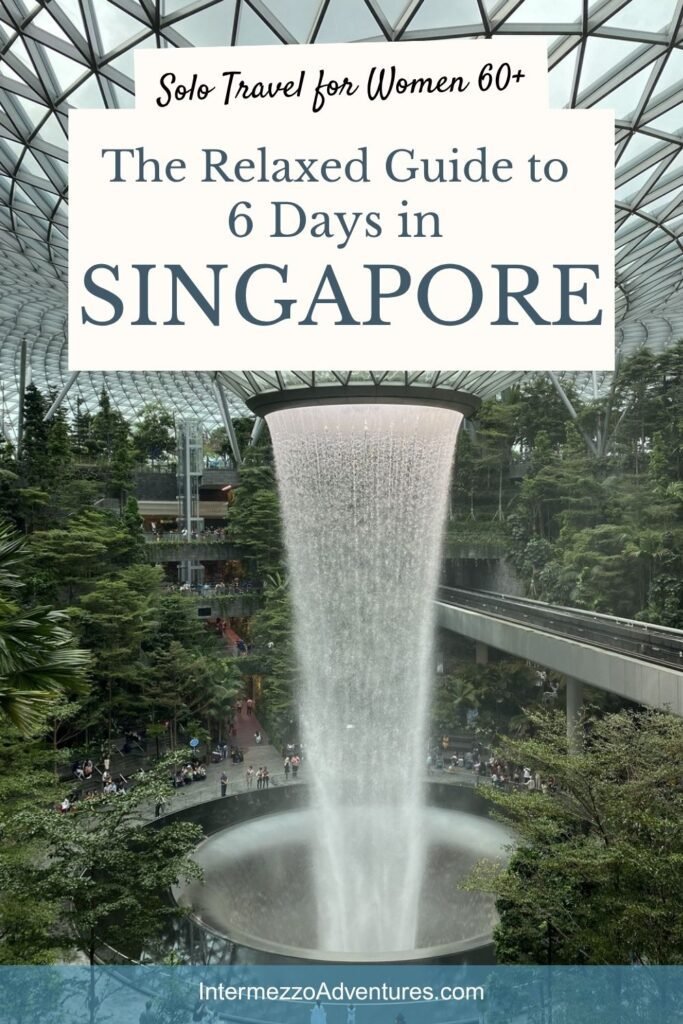
- More than just an airport, Jewel is a lush indoor wonderland with the world’s tallest indoor waterfall, gardens, shops, and dining — visiting makes a stunning conclusion to your Singapore itinerary.
- Allow a couple of hours at Jewel before heading to your departure gate. View the waterfall and lush gardens, enjoy some shopping in the mall, and indulge in your last delicious Singaporean meal.
- Jewel is in the public area of the airport, so visiting on your way home is the best option. On arrival at the airport, check in your luggage and walk to Jewel — it’s connected to Terminal 1, and clearly sign-posted. Passengers in international transit usually have to clear immigration before going to Jewel, so plan your visit on your departure day.
Other Activities
- Orchard Road: Gets its name from the fruit plantations that abounded in the 1830s. Since the 1950s, it’s evolved into an upscale retail area. On our trip, J and I decided against visiting as neither of us were interested in a shopping experience we could probably get at home! However, there is a monthly, open-air market that many people enjoy.
- While in the Orchard Road area, visit Emerald Hill Road, a street of millionaire’s homes; and the Astana and Sri Temasek, or governor’s residence.
- Sentosa Island: If amusement parks are your thing, head over to Sentosa Island, where you’ll find the S.E.A. Aquarium,Fort Silos, Skypark Sentosa, Sentosa 4D Adventure Land, the Skyline Luge, and more. Take the Singapore Cable Car to arrive or depart Sentosa Island in style!
- Museums: Singapore boasts a variety of museums — perfect if history and culture are your passion, or you need to pass the time on a wet day. Choose from: the Peranakan Museum, Malay Heritage Centre, Changi Chapel and Museum, National Gallery, ArtScience Museum, the Lee Kong Chian Natural History Museum, the National Museum of Singapore, the Asian Civilisations Museum, and more.
Out of Town Destinations
If you have more time, or want to venture out of the city surrounds, there are several gardens and reserves that are worth a visit. You’ll need to allow extra time to get there, but most are served by the MRT and/or buses. Here are a few places to choose from:
- The Southern Ridges: Four coastal parks connected by bridges, including the amazing Henderson Waves. Take in the spectacular views from these parks.
- MacRitchie Reservoir Park: With several walking trails, including the TreeTop Walk suspension bridge, MacRitchie Reserve is a popular destination for walkers and anyone hoping to spot macaques, boars, or sometimes even a pangolin.
- Chinese and Japanese Gardens: The stunning Chinese garden follows traditional imperial garden design, with arched bridges, moon gates, and twin pagodas. Nearby, the Japanese Garden offers a more Zen experience, with a tranquil landscape and pebble paths.
- Palau Ubin: Take a ferry to this island lying off Singapore’s northeast coast; hire a bike when you arrive for the easiest way to explore the area. There is also a boardwalk along the coast — worthwhile walking along at low tide to see various marine life.
This easy-going outline mirrors the way J and I experienced Singapore. Looking back, what made these six-days so memorable wasn’t how much we fitted in, but how unhurried they felt. Singapore has a way of offering both energy and calm — bustling one moment, tranquil and green the next — and this gentle pace shaped our entire stay.
Travel Essentials for a Week in Singapore
After mapping out an easy-going way to explore Singapore over six days, it feels like the perfect moment to talk about what to pack — the small essentials the make everything run more smoothly once you arrive.
Singapore is one of those places that constantly surprises — a heady mix of ultra-modern skyscrapers, lush green urban jungle, old shophouses, temples, markets, and waterfront walks. Though small geographically, it packs in an incredible variety of experiences, offering all the buzz of a global city layered with rich cultural history. One moment you’re wandering through a heritage precinct, the next you’re beneath soaring glass towers or strolling through tropical gardens. It’s exactly this contrast — and the consistently warm climate — that makes packing for Singapore simple.
If you’re planning a trip to Singapore and wondering what to bring, I’ve put together this travel essentials list to make things easy. I’ve been lucky enough to travel in Asia many times, across different seasons and for different reasons, which has helped me fine-tune what really earns a place in my suitcase.
My aim is always the same: to keep things light, practical, and manageable — without feeling unprepared. Packing for a week in Singapore is about keeping things simple, while being prepared for any special occasions along the way. I’m not one to go in for fancy or expensive items — just the ones I find most useful. These are the items I personally rely on for comfort, convenience, and peace of mind when travelling in places like Singapore.
Affiliate Disclosure: Some of the links on this page are affiliate links. This means I may receive a small commission (at no further expense to you) if you click through and make a purchase. IntermezzoAdventures.com is a participant in the Amazon Services LLC Associates Program, an affiliate advertising program designed to provide a means for sites to earn commission fees by advertising and linking to Amazon.com.
Clothing
- Think light, summery layers for most days — breathable cottons or linens that handle the heat and humidity. Items that wash and dry quickly can help minimise how much you carry.
- A light fleece, cardigan, or shawl — useful for your flight (planes can be chilly!) or to ward off air-conditioning chills.
- Comfortable walking shoes are a must for exploring streets, parks, and gardens. If you plan to eat in more formal restaurants, pack a slightly smarter outfit, or a jacket to “dress up” more casual clothes. Sandals for hot days, if you’re comfy walking in them.
- Long sleeves, long dresses, or trousers are useful when visiting temples, mosques, or other sacred sites, where a modest dress code is often required.
- Compression Socks — arrive in Singapore ready to hit the road! Choose cool compression socks for comfort and coolness during your flight.
- Personal items — medications, toiletries, cosmetics, tissues, underwear, swimming gear, bandaids (plasters), etc.
Practical Items
Singapore is hot, humid, and often sunny, with occasional sudden showers. A few essentials to keep in your daypack include:
- Refillable water bottle — stay hydrated while exploring the city.
- Sunscreen and hat — essential for long days outdoors.
- Travel umbrella or lightweight rain jacket — sudden tropical showers are common.
- Sunglasses — useful for both city streets and garden walks to avoid the glare.
- Small crossbody bag or backpack — for carrying essentials comfortably and securely.
Travel Tech and Money
- Smartphone — preload it with offline maps from Google Maps, along with the MyTransport.SG app for navigation.
- Power bank — to keep your phone charged throughout the day.
- eSIM — stay connected with data on your phone, without changing your number. I recommend Airalo. Alternatively, install a local SIM card on arrival (you’ll get a different phone number with local cards).
- Power adapter — choose an international power adapter, or one specifically for Singapore (Type G, the same as used in the UK).
- Cash — Singapore is very card-friendly, so a small amount of cash is enough for street food, hawker markets, and small purchases.
- Multi-currency travel debit card — makes handling payments easy avoids high currency conversion fees. I personally recommend the Wise card.
- Don’t forget your passport, Singapore Arrival Card (complete it online before arrival), travel insurance, and any tickets or bookings stored digitally for convenience.
Optional Extras
- Reusable shopping bag — perfect for groceries, souvenirs, or market finds.
- Insect repellent — useful for early mornings or evenings in parks and gardens.
- Travel-sized hand sanitiser or wipes — convenient for busy markets, hawker centres, public transport, and toilets.
- Ziplock bags (large) — very useful for grouping things together when packing, or storing wet items of clothing.
- Reusable Travel Utensil Set — I’ve lost count of how many times I’ve found this useful…for easy meals in the hotel room or for cutting fruit.
Recommended Guidebooks


Ready for Takeoff!
With your itinerary and essentials sorted, you’re all set to dive into Singapore — a city where sleek skyscrapers meet leafy gardens, markets buzz with colour, and every street has a story to tell.
As you plan your trip, remember that the best adventures often come from a balance of planning and spontaneity. So, avoid over-planning…sure, think about what you’d like to see and do, but leave space for those unscripted moments. Get ready for a week of sights, sounds, and flavours that stay with you long after you leave.
Singapore has so much to offer, whether this is your first visit or a return journey. I hope these tips, the itinerary, and the packing suggestions help you create a week that’s enjoyable, manageable, and full of adventure along the way.
If you missed my Singapore Story…
- Singapore, Unscripted: Part 1 – Revisiting the Lion City: Follow our return to Singapore, exploring vibrant neighbourhoods and city life.
- Singapore, Unscripted: Part 2 – Discovering Nature in the City: From gardens to parks, see the quieter, green and natural side of Singapore.
Leave a Reply