Part 2: Nordic Slow Travel Series — Hirtshals, Denmark.
Hirtshals, Denmark — a tiny seaside town on the edge of the North Sea — must be about as far as you can travel from Copenhagen without actually leaving the country. Perched at the very top of Jutland, it feels less like a destination and more like the end of something: the end of the railway line, the end of the motorway, the edge of the land itself.
So why would anyone choose to visit a town that many travellers have never even heard of?
In truth, I hadn’t planned to visit Hirtshals at all. I discovered its existence only after booking a berth on the Smyril Line ferry to the Faroe Islands and learning that the departure port was here. Hirtshals is a working harbour town — practical, purposeful, and shaped by the moods of the North Sea.
A Brief Stopover in Hirtshals, Denmark
I had allowed just one night before my ferry to Tórshavn departed the following afternoon. It seemed sufficient at the time — a brief stopover before heading further north. But stepping off the train into the cool October air, with the wind already gathering strength across the dunes, I sensed that Hirtshals was more than merely a point of departure.
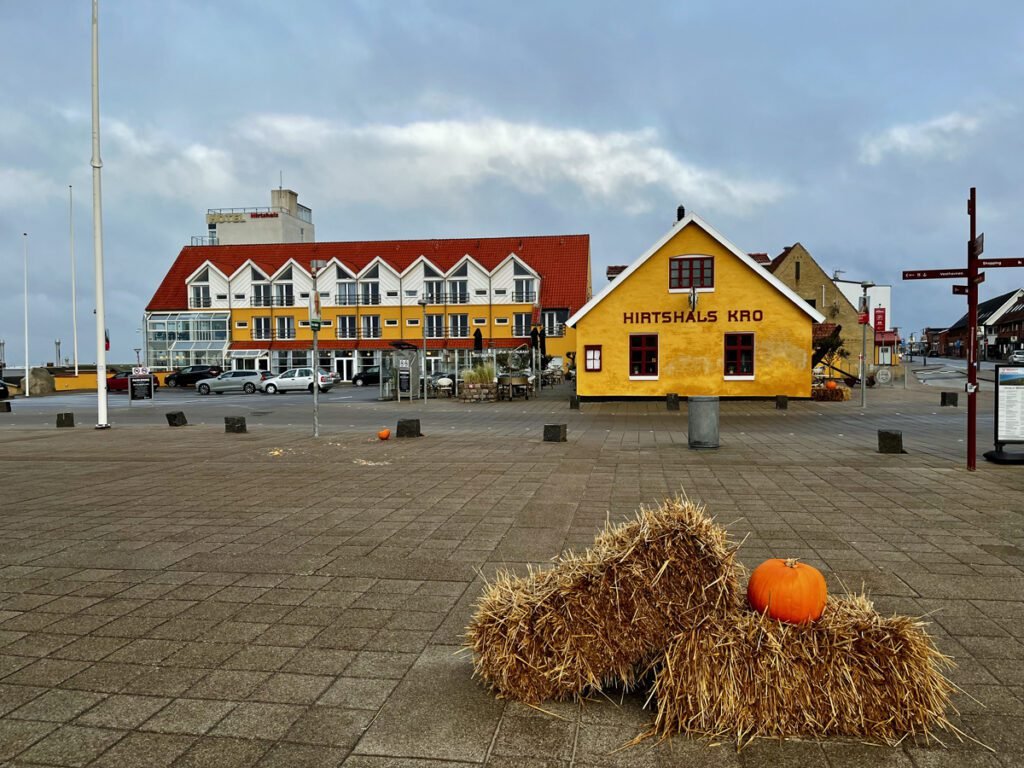
Even in late October, when the town is quiet and the summer visitors long gone, there is something compelling about this stretch of Denmark’s North Sea coast. The vast skies, the bracing salt air, the lonely lighthouse standing watch above the dunes — all combine to create a landscape that feels elemental and unexpectedly restorative.
In hindsight, I could happily have stayed longer. But with the ferry to the Faroe Islands beckoning, I made the most of the time I had — discovering that even a single night in Hirtshals can leave a lasting impression.
Affiliate Disclosure: Some of the links on this page are affiliate links. This means I may receive a small commission (at no further expense to you) if you click through and make a purchase. Learn more.
Why Visit Hirtshals, Denmark?
At first glance, Hirtshals may appear to be little more than a ferry port at the top of Denmark. And it is true that many travellers pass through on their way to the Faroe Islands or Iceland without lingering.
But to do so would be to miss the quiet appeal of this small northern town. Hirtshals sits on a dramatic stretch of Denmark’s northern coastline, where wide skies meet restless water and the wind rarely rests. The beaches are expansive and often blissfully empty, especially outside the busier summer months. It is a place for long coastal walks, for breathing deeply of salt air, and for feeling the raw power of sea and sand.
History, too has left its mark here. The elegant white Hirtshals Lighthouse has watched over the Skagerrak since 1868, while scattered among the dunes are dozens of German bunkers build during the Second World War as part of Hitler’s Atlantic Wall.
Together they tell a story of maritime life, strategic geography, and the enduring relationship between this coastline and the wider world.
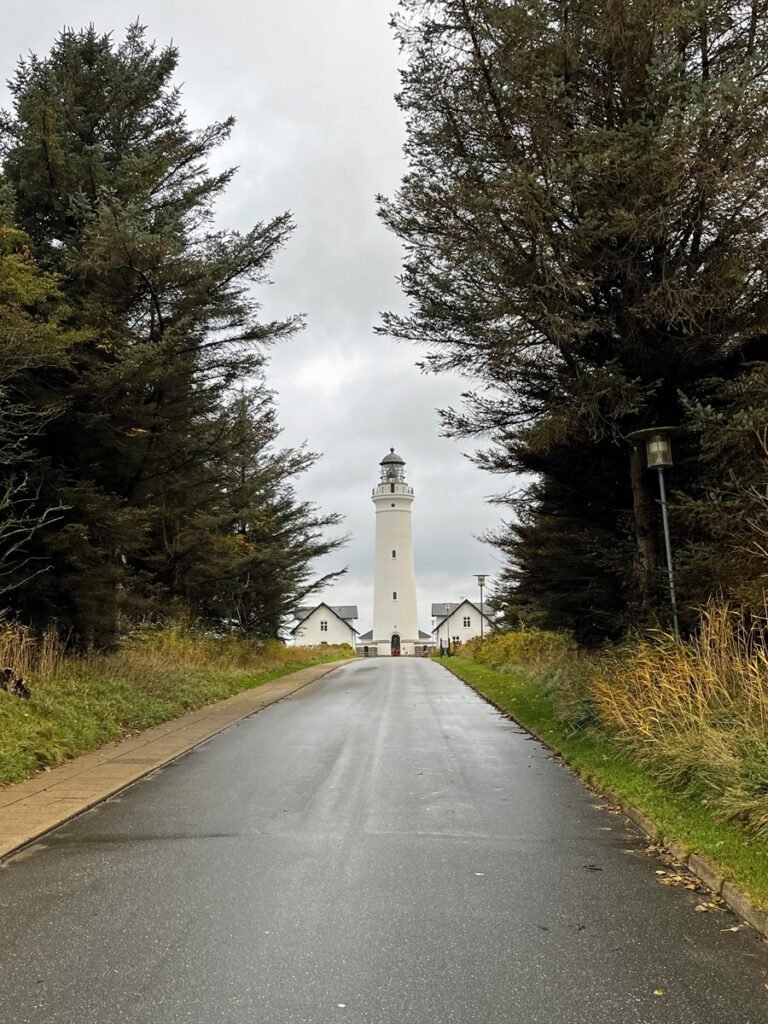
Beyond the shore, Hirtshals remains a working fishing town, with a busy harbour, seafood restaurants, small galleries, and the renowned North Sea Oceanarium — one of Europe’s largest aquariums.
For “slow travellers”, Hirtshals, Denmark offers something increasingly rare: space. Space to walk. Space to think. Space to pause before journeying onward — or to simply stay awhile and let the North Sea set its rhythm.
Getting to Hirtshals, Denmark
Reaching Hirtshals from Copenhagen is straightforward — but it does require patience. The journey by train takes around five and a half to six hours, carrying you steadily north-west through the length of Jutland toward Denmark’s farthest edge.
The landscape changes quickly once you leave Copenhagen behind. The dense urban sprawl gives way to wide pastoral farmland — flat fields stretching toward an equally flat horizon, dotted with wind turbines and neat farmhouses. For long stretches, there is very little variation at all. It is calm, orderly, and quietly Danish.
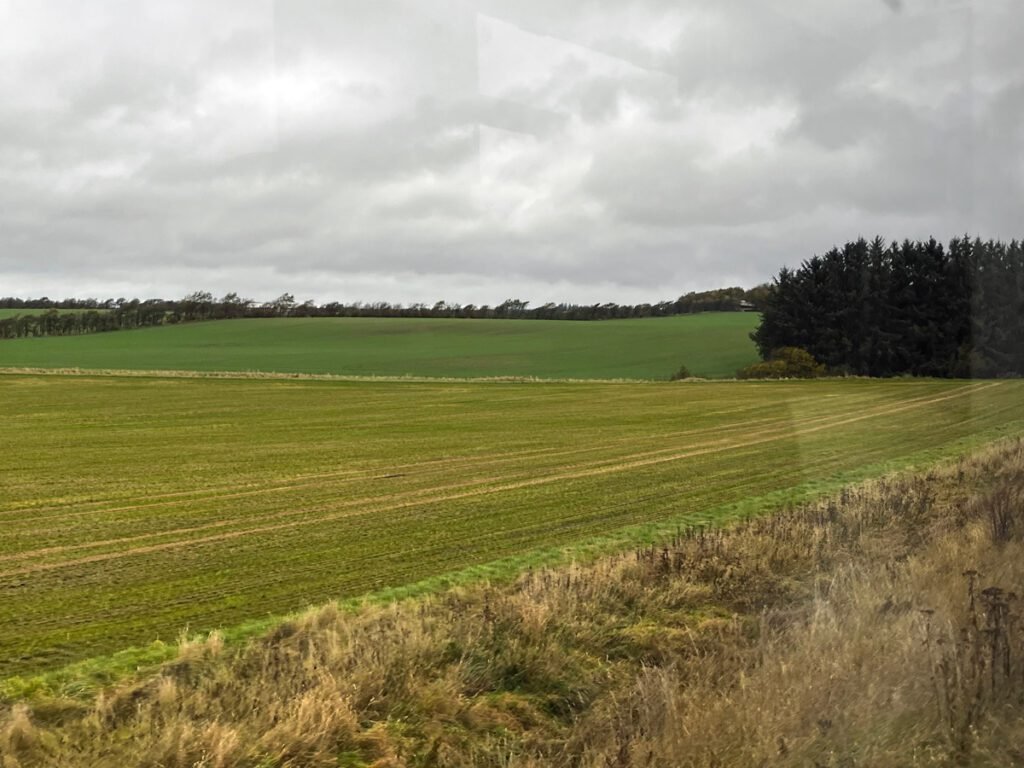
My journey involved one train change: from an intercity service to a regional line further north. Everything was running smoothly until Aarhus.
Aarhus is a major stop — but it wasn’t where I was meant to change. So when several announcements were made (all in Danish) and everyone else calmly stood up and disembarked, I thought little of it. Surely this was simply a longer station stop and where all these people wanted to get off?
Until a train guard appeared and briskly instructed me to move to carriage #72.
“I’m already in #72,” I replied, somewhat puzzled, as I’d paid for a reserved seat.
But it seemed that the carriage I was in was no longer #72 — and the “new” #72 had not been 72 just moments before!
With no time for further linguistic negotiation, I gathered my belongings and hurried along the platform to locate the newly-reassigned carriage. I found my “new” seat just in time before departure. I’m still not sure what happened — I think the train was being split — but it all worked out perfectly in the end.
A short while later, the train pulled into Aalborg, where I transferred (without mishap) to the local line for the short final leg to Hirtshals.
And that, in a way, is Danish transport in a nutshell: efficient, calm, and quietly competent — even if you don’t entirely understand what’s going on!
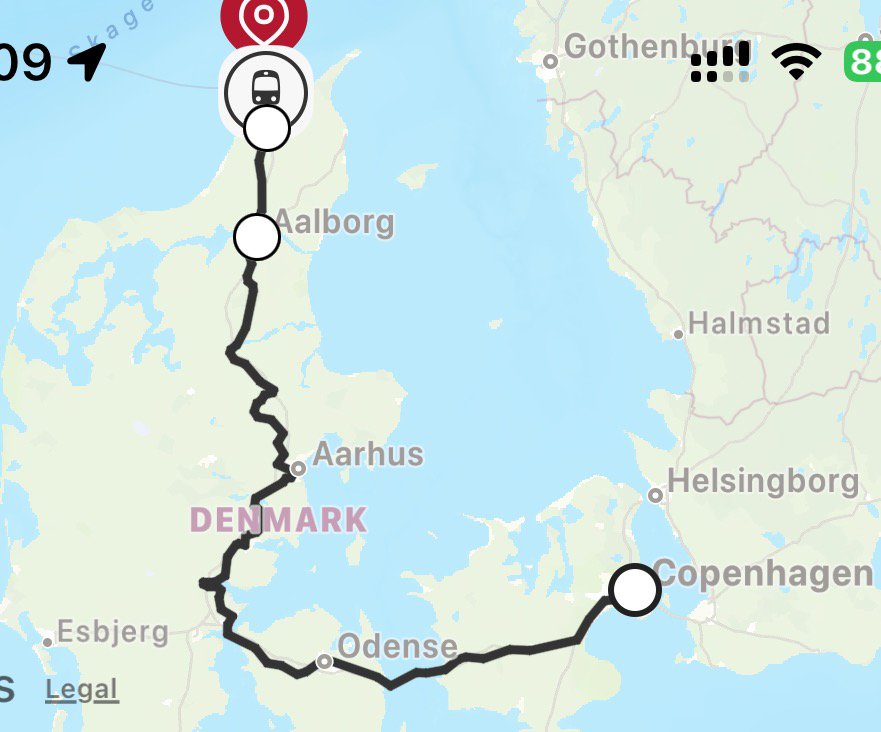
Traveller’s Tips: Transport Options to Hirtshals, Denmark
If you’re planning your own journey to Hirtshals, here are your main options:
By Train (from Copenhagen Central Station)
- Approximately 5.5 – 6 hours
- Usually one or two changes (often in Aarhus and/or Aalborg)
- Easy connections and comfortable services
- Book ahead using the DSB app to guarantee a seat reservation
Fly and Train combination
- Flight from Copenhagen Airport (CPH) to Aalborg (AAL) — about 45 minutes
- Check available flights on Expedia or Kayak.
- Train from Aalborg to Hirtshals — around 1 hour
Bus and Train Combination
- Long-distance bus from Copenhagen Bus Station to Aalborg — around 5.5-6 hours. Operated by FlixBus.
- Train onward to Hirtshals (around 1 hour)
Self-drive
- Around 5 hours by car from Copenhagen
- Ideal if you plan to explore North Jutland more widely
- Particularly useful if taking your car on the ferry to the Faroe Islands or Iceland
Whichever route you choose, the final approach feels unmistakably northern. The air sharpens, the dunes appear, and eventually you arrive in Hirtshals — just a short walk from the sea.
Planning tip
If you’re planning your own Danish or European adventure, don’t forget to look into the new EES and ETIAS digital border check and entry authorisations that are rolling out over 2026. Read my full guide to EES and ETIAS here.
Where to Stay in Hirtshals, Denmark
Despite its small size, Hirtshals offers a surprisingly varied range of accommodation. Whether you’re stopping for a single night before boarding the ferry, planning a longer northern coastal stay, or travelling with a campervan or tent in summer, there are options to suit different budgets and travel styles. You’ll find:
- Small family-run hotels near the harbour
- Cosy B&Bs and guesthouses close to the beach or the port
- Holiday cottages and apartments
- Campsites popular in the warmer months
- Check available accommodation in Hirtshals here.
My Stay at B&B by the Sea
I chose a small bed-n-breakfast with fabulous reviews called B&B by the Sea — and it could not have been better placed. Quite literally across the road from the beach, it offered exactly what I needed after a long day of travel: warmth, comfort, and the soothing sound of wind moving through the dunes.
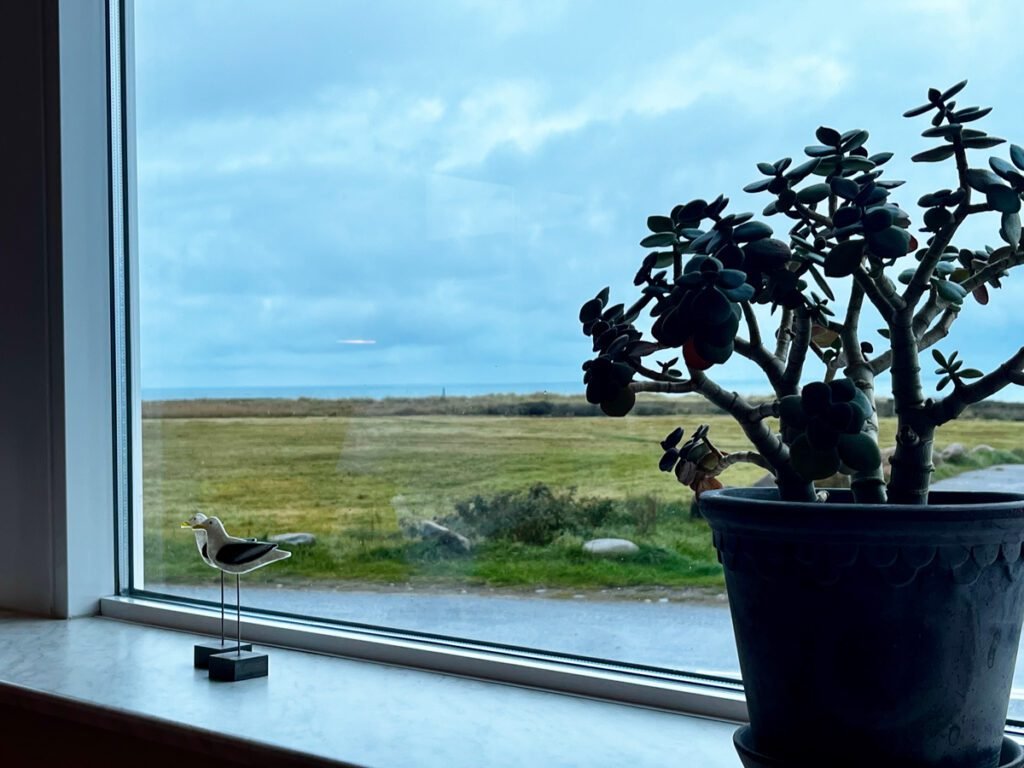
Stepping off the train in mid-afternoon, the famously unpredictable North Sea weather was already making itself known. Only a light drizzle at first — but enough to dampen the thought of a 15-minute walk with luggage. As I stood checking Google maps for directions, a lone taxi pulled into the station forecourt.
The taxi didn’t seem to be waiting for anyone in particular, so, tapping gently on the driver’s window, I asked if he could take me to the B&B. The exchange that followed was unexpectedly amusing — he was the first person I’d encountered in Denmark whose English wasn’t quite as polished as elsewhere. Between gestures, smiles, and showing my map, we managed perfectly well. Within minutes, I was gratefully seated inside, watching the drizzle streak the windscreen. Like most taxis in Denmark, card payment was simple and contactless.
At the B&B, I was shown to a spacious, comfortable room with both a double and single bed, a small seating area, free Wi-Fi, and a large private bathroom. Everything was spotlessly clean, calm, and thoughtfully arranged.
But the true highlight of the stay was breakfast.
The following morning, the dining table was laid with fresh fruit, granola, yoghurt, crusty bread, cheeses, eggs, smoked salmon, and warm waffles made to order. There was strong coffee, juice, and — in true local fashion — I was offered a small shot of bjesk, a spiced schnapps traditionally made from wild heath plants such as yarrow, St John’s wort, and heather gathered from along the coastline. Hirtshals had recently won the title of “Bjesk of the Year 2025”, I was told with quiet pride.
Even at breakfast, this pick-me-up seemed entirely appropriate!

For a short stay in Hirtshals, particularly outside peak summer season, a welcoming guesthouse like this feels far more personal than a larger hotel — though both are available. If you’re planning your own visit, it’s worth booking ahead in summer when holidaymakers increase demand, and also for the nights before ferry departures (at any time of year).
Things to Do in Hirtshals
Hirtshals may be small, but its appeal lies in its landscape rather than a long list of attractions. The sea, the wind, and the dunes are the main characters here — and most of what you do involves stepping outside and letting the North Sea set the pace.
Visit Hirtshals Lighthouse (Hirtshals Fyr)
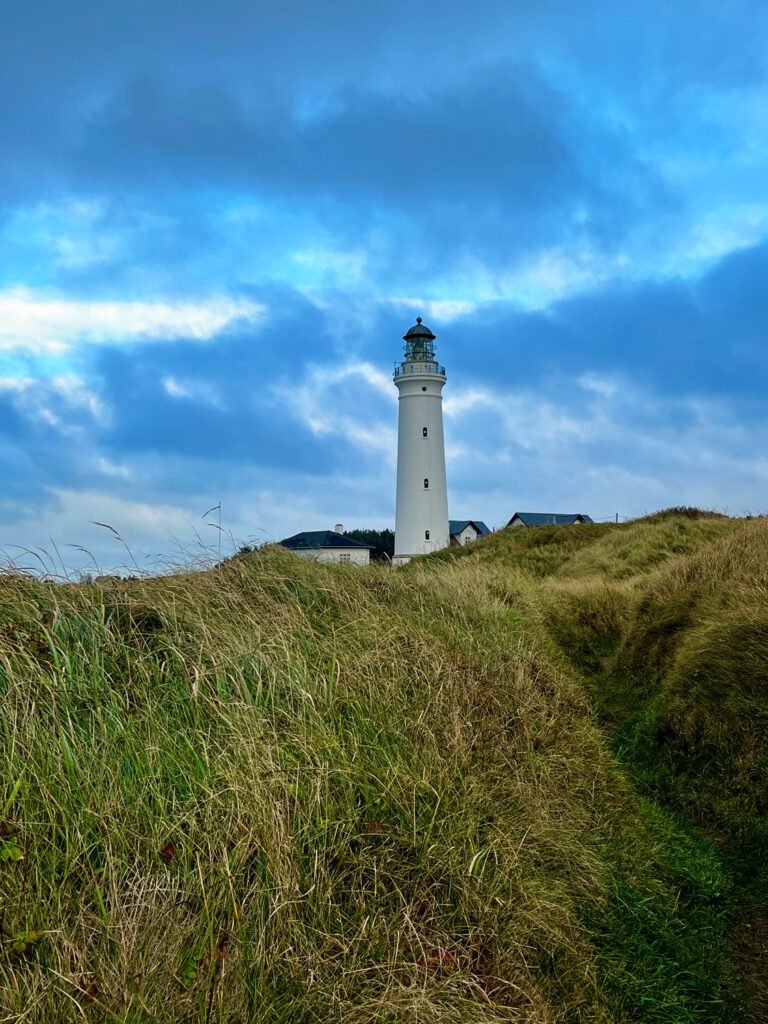
On the advice of my host, and with the rain shower passed, I set out almost immediately after arriving to see the lighthouse before dusk. In late October the daylight fades quickly, and a powerful breeze was already gathering strength off the water.
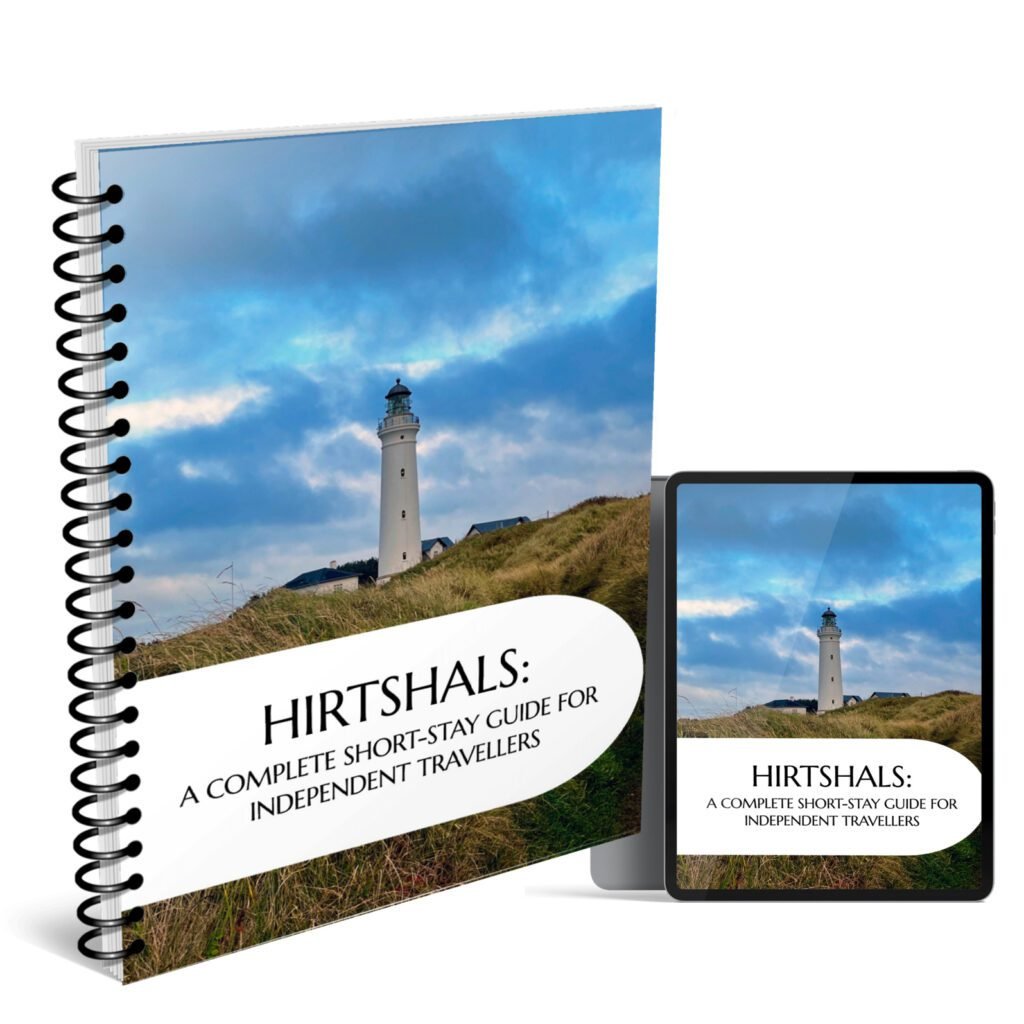
Hirtshals Fyr — first lit in 1868 — stands 35 metres high on a grassy rise overlooking the Skagerrak. From town, it’s about a 15-minute walk through undulating coastal landscape. Even before you reach it, you can feel the exposure: wind pressing against your coat, gulls wheeling overhead, the vast horizon stretching uninterrupted to Norway.
The lighthouse is open to visitors, and what struck me most was the trust-based honesty system for entry. There was no attendant, no ticket desk — simply a wall-mounted ticket machine for paying the small fee before climbing the narrow staircase to the top.
It felt faintly surreal to emerge onto the circular deck all alone, the wind howling around the tower and only a modest railing separating me from the drop below. Thirty-five metres may not sound dramatic on paper, but in stiff a North Sea breeze it feels quite high enough! The view, however, is magnificent: dunes rolling toward the town on one side, restless grey sea on the other.
Explore the WWII German Bunkers
Surrounding the lighthouse and scattered amongst the dunes are dozens of concrete bunkers — stark reminders of a very different chapter in Hirtshal’s history.
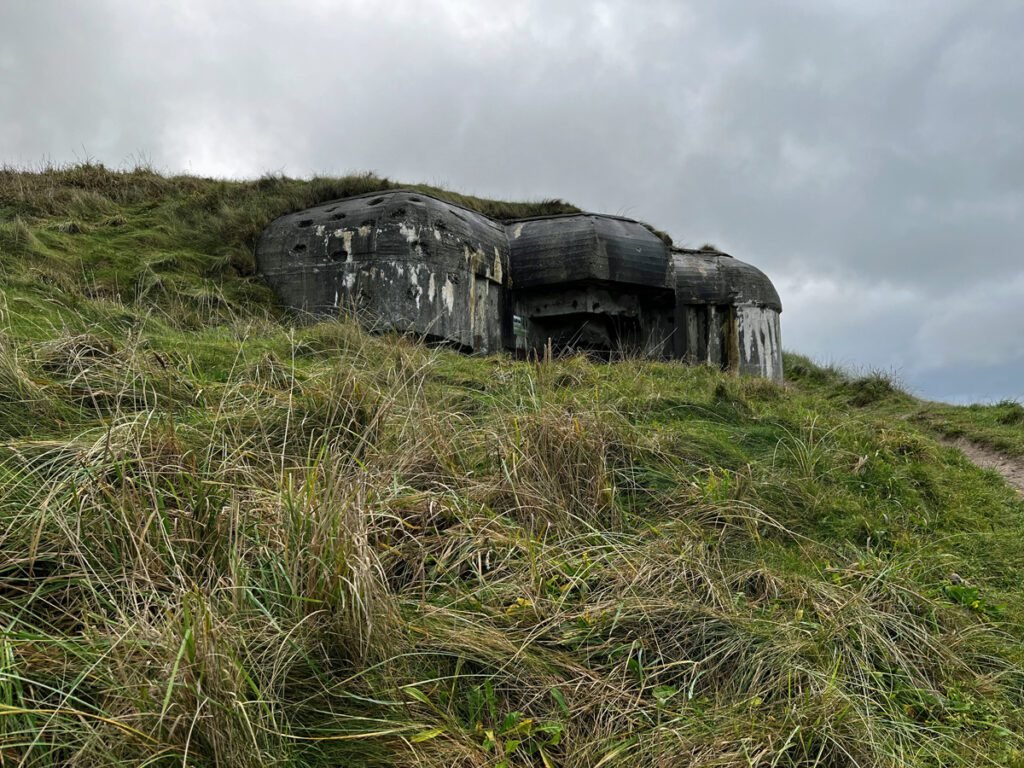
During the German occupation of Denmark (1940-1945), this coastline became part of Hitler’s Atlantic Wall — an extensive defence system stretching from Norway to France. Along Denmark’s shores alone, more than 6,000 bunkers were constructed. Hirtshals, with its strategic harbour and commanding sea views, became a key fortified point.
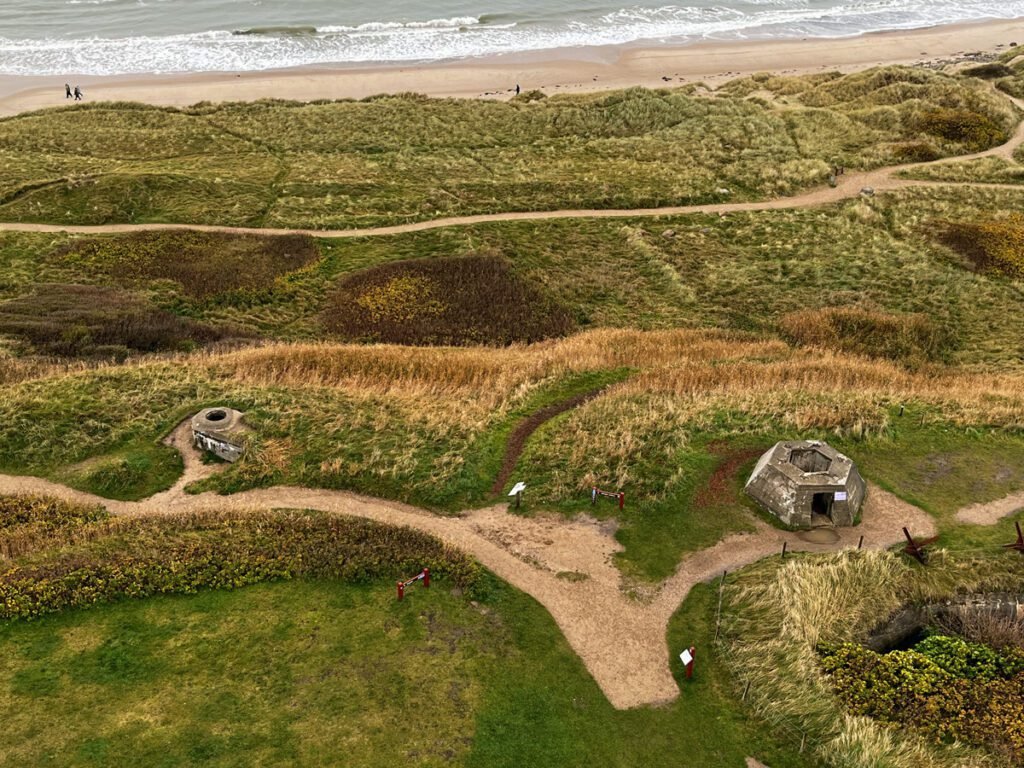
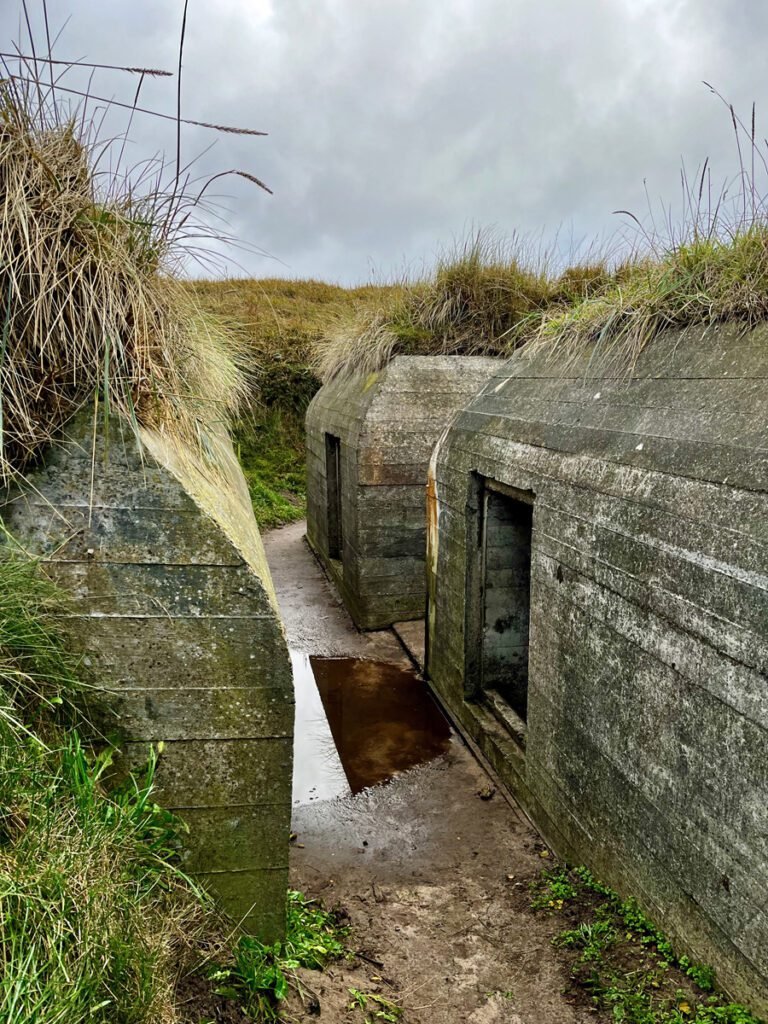
Today, many of the bunkers remain partially buried in sand, their raw concrete softened by decades of wind and weather. Winding sandy tracks thread between the dunes, leading you unexpectedly to dark entrances and thick-walled observation posts.
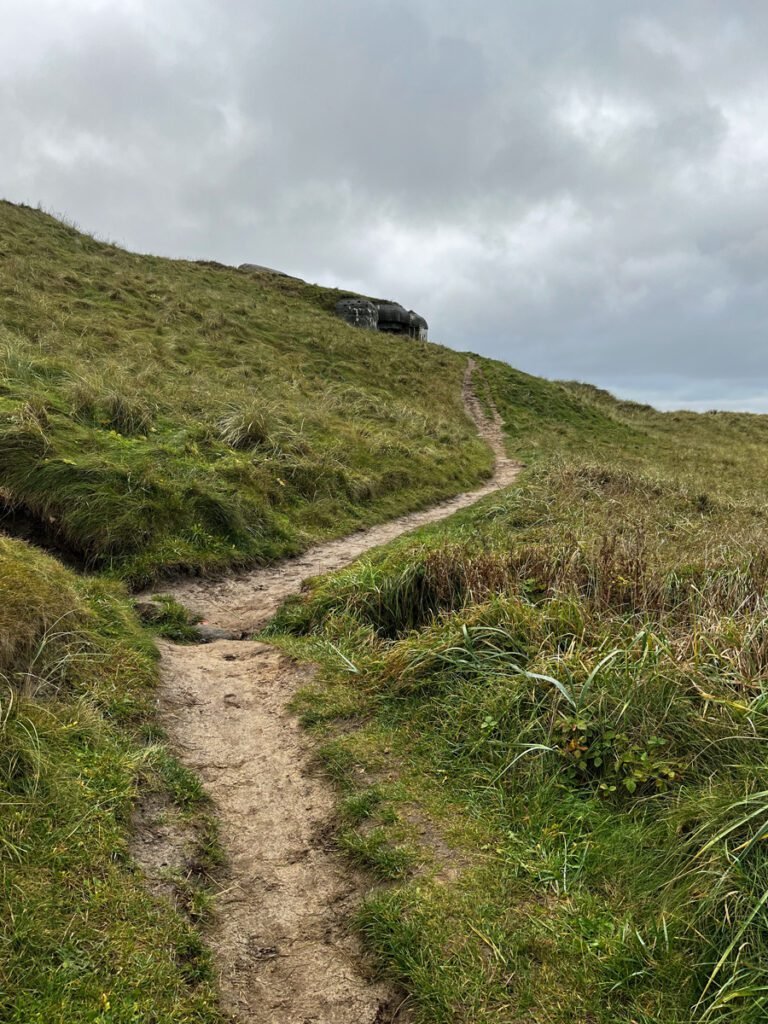
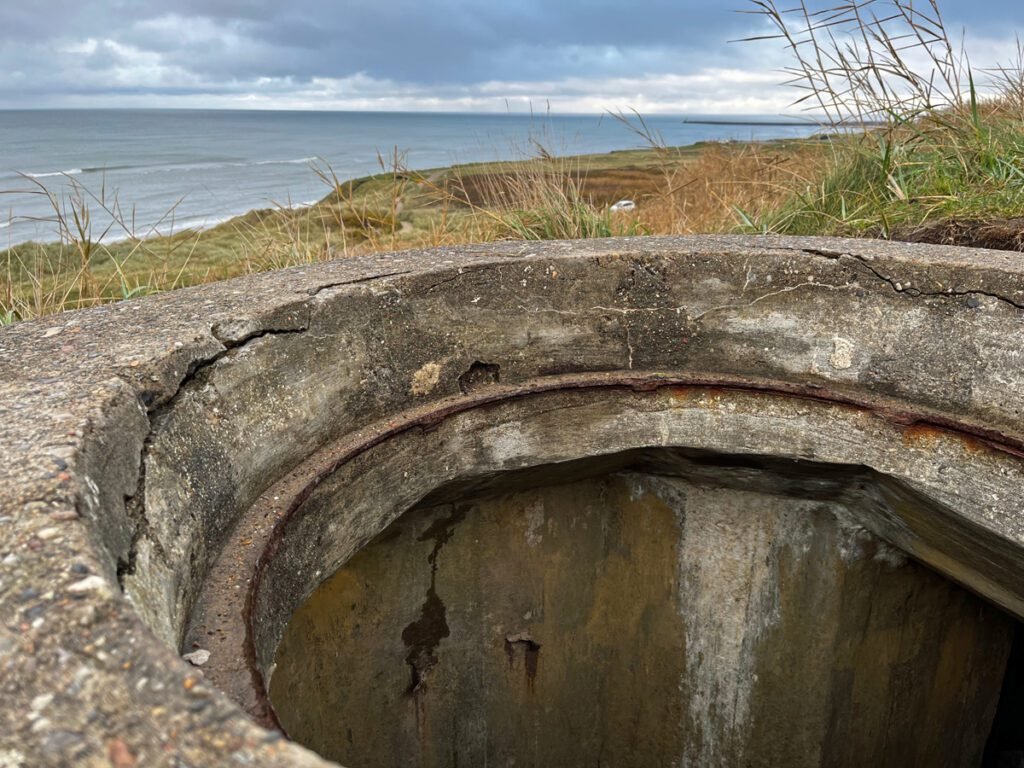
I found wandering among them both sobering and strangely beautiful. Coastal grasses bend in the wind, the sea roars in the background, and the heavy structures stand as quiet monuments to history. It is impossible not to reflect on how this peaceful landscape once braced for invasion.
Walk the Husmoderstranden (Housewife Beach)
After exploring the lighthouse and bunkers, I made my way down toward the beach known locally as Husmoderstranden — literally “Housewife Beach”.
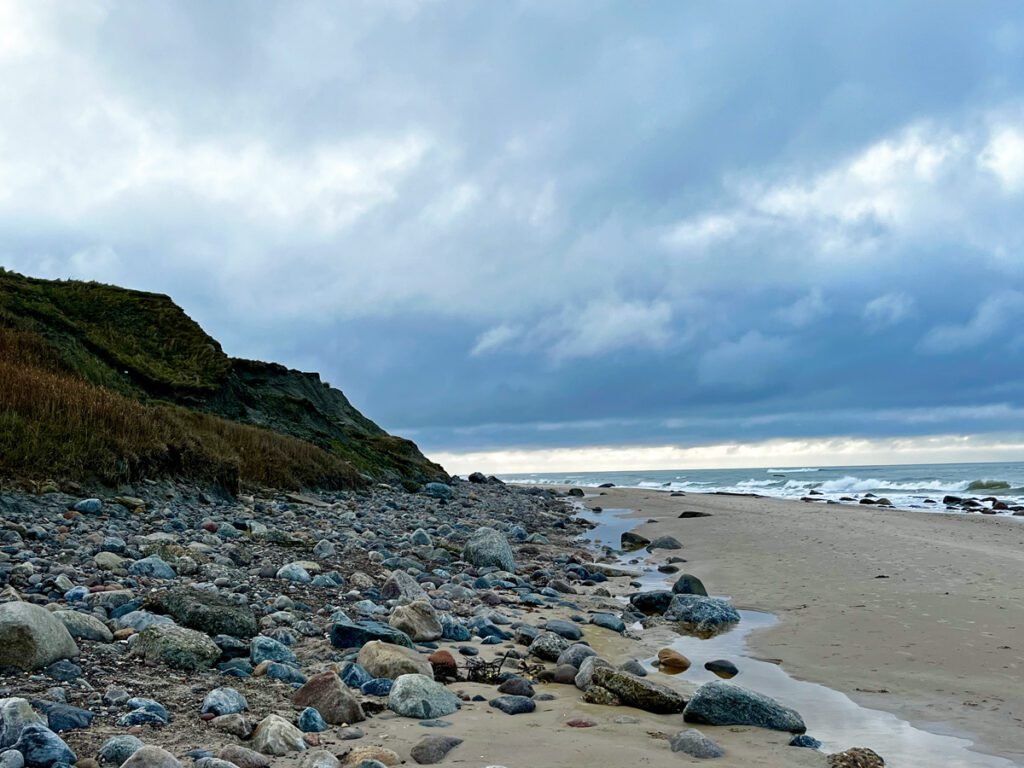
The name dates back to the 1960s when this stretch of beach became easily accessible close to town and relatively sheltered compared to more exposed sections of the coast. it became a popular place for families to gather. Children could paddle safely in summer, and mothers — husmødre — would meet here while keeping an eye on the water. The name has endured, a small linguistic echo of everyday coastal life in decades past.
Today, Husmoderstranden remains wide and beckoning, with fine sand and pebbles stretching beneath an enormous North Sea sky. In late October it was almost empty — just the rhythmic crash of waves and the sharp scent of salt carried in the wind.
There is something deeply restorative about walking along this coastline. The air is bracing; it clears the mind rather than lulls it. You feel small against the scale of sea and sky — and yet entirely present.
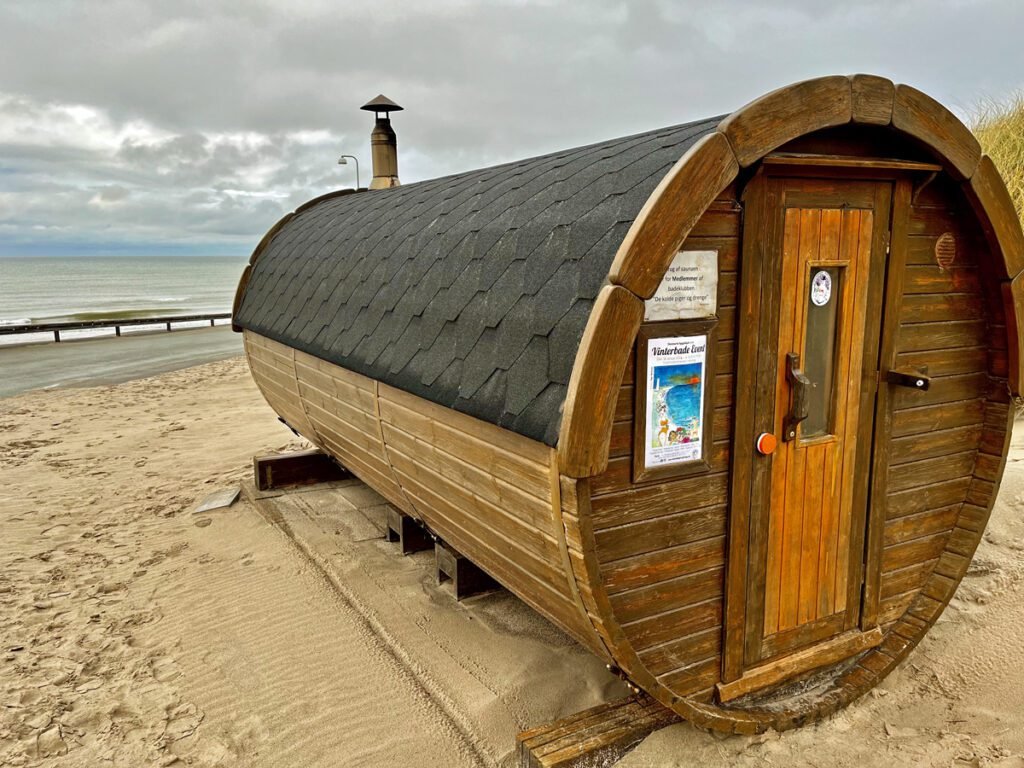
As evening approached, I followed the curve of the shore back toward town, eventually climbing up toward the harbour in search of dinner. There are several cafés and seafood restaurants in the town, but I opted instead for a simple picnic-style meal: fresh bread, cheese, fruit, and a small bottle of wine from the local supermarket.
Back in my room, with the rain once again splashing against the window, it felt like the perfect end to an evening on the edge of the world.
Visit the North Sea Oceanarium
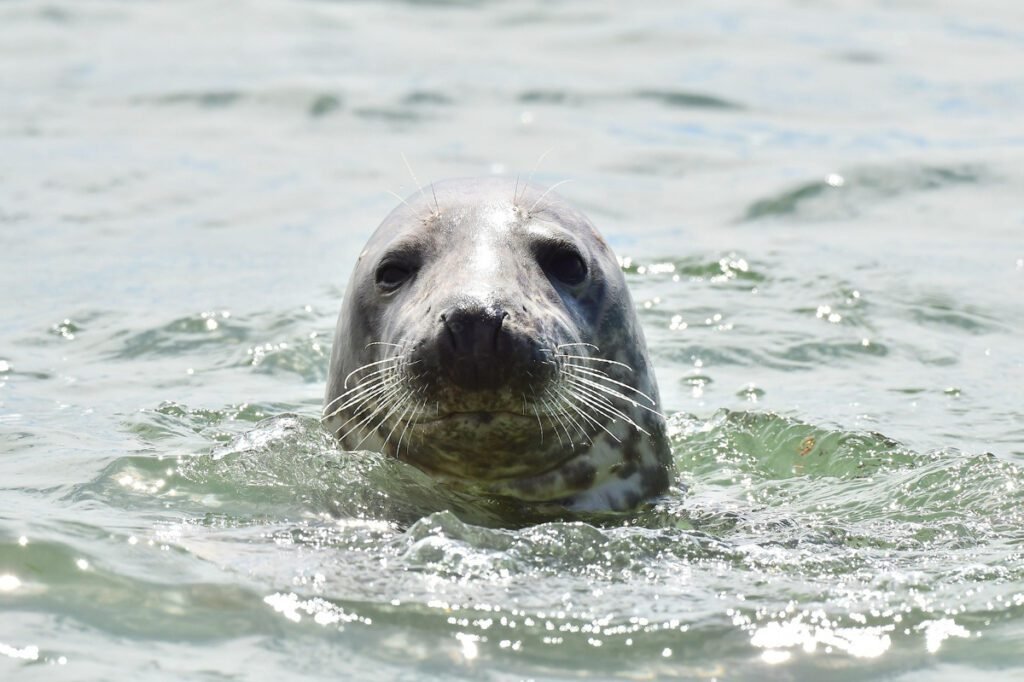
One of the most well-known attractions in Hirtshals is the North Sea Oceanarium (Nordsøen Oceanarium), often described as the largest aquarium in Northern Europe.
Located just outside the town centre, the Oceanarium focuses on marine life from the North Sea and surrounding waters. Its enormous central tank — holding millions of litres of seawater — is home to sharks, rays, schools of herring, and other species native to this coastline. There are also seal enclosures, interactive exhibits, and educational displays explaining the ecology and fishing traditions of the region.
I was tempted to visit, particularly given Hirtshal’s deep connection to the sea. In the end, with only one night in town and a ferry departure looming, I chose to spend my remaining hours outdoors instead. But for families, marine life enthusiasts, or anyone with a little more time, the Oceanarium is one of the top things to do in Hirtshals and well worth allowing time for.
Explore the Harbour and Local Crafts
Beyond the dunes and lighthouse, Hirtshals is first and foremost a working harbour town. Fishing boats move steadily in and out of port, and the scent of salt and diesel mingle in the air — a reminder that this is a place shaped by practical industry rather than tourism alone.
The harbour area is worth a slow wander. Depending on the season, you may see fishermen unloading their catch or locals strolling along the waterfront paths. Several cafés and restaurants cluster near the harbour, serving freshly caught fish and traditional Danish dishes.
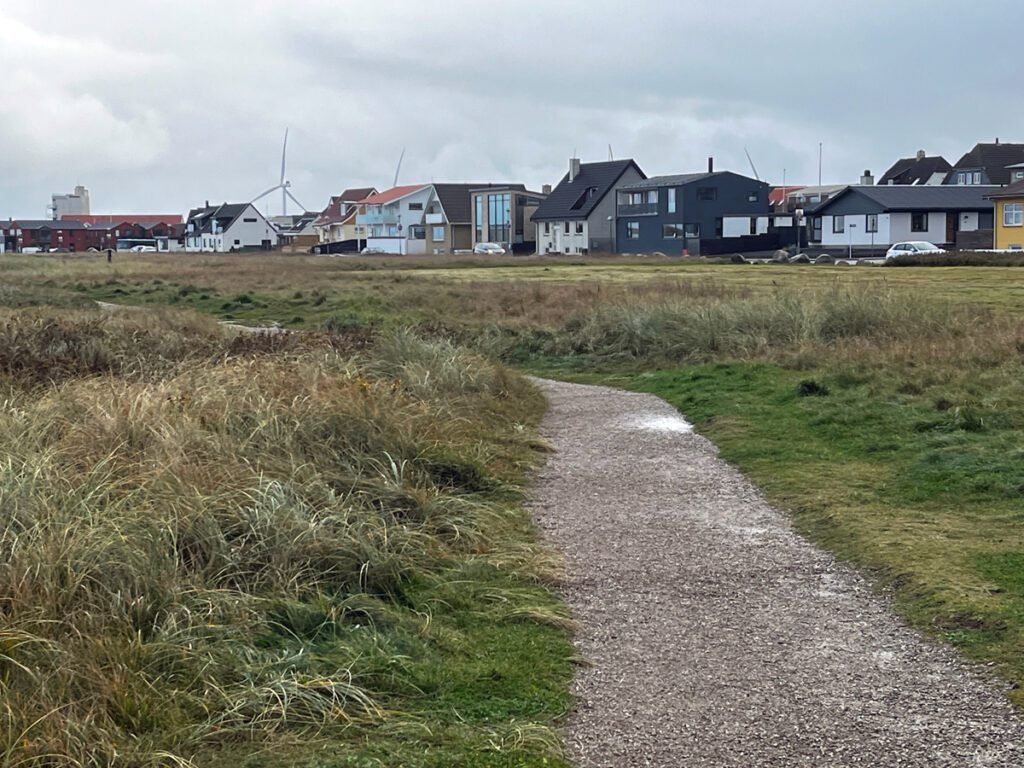
On my final morning, after that memorable breakfast, I set out once more along the beach before looping back through the town. Small galleries and craft shops are scattered along the main streets — understated but inviting. There is a quiet creativity here: artworks inspired by sea and sand, and handmade textiles reflecting the colours of the dunes, grasses, water, and sky.
Hirtshals is not flashy, nor does it try to be. Its charm lies in its authenticity — in the rhythm of harbour life, the resilient of a town built against the Atlantic weather, and the sense that you are standing at the very edge of Denmark.
And then, of course, there is the ferry.
With boarding time approaching, I returned to my guesthouse, collected my luggage, and took a taxi to the port — ready to continue northward. As the ship later eased away from Hirtshals breakwater and Denmark slowly receded into a horizon lit by a blazing sunset, I realised that Hirtshals had been more than simply a departure point.
It had been a welcome interlude. A deep breath of sea air before my journey continued.
Eating Well in Hirtshals
Hirtshals offers a surprising selection of dining options, particularly focused on seafood and traditional Danish fare.
Seafood & Harbour Restaurants
Given the town is a working fishing port, fresh seafood is the obvious choice. Several restaurants near the harbour serve classic dishes such as: fried or grilled plaice, fish fillets with remoulade, shrimp-topped smørrebrød, and mussels. Menus tend to be simple, fresh, and unfussy — reflecting the town’s maritime roots.
Cafés & Casual Dining
In the town centre you’ll find small cafés offering: Danish open sandwiches, burgers and light lunches, Asian food options, coffee and pastries. These are good choices for a relaxed midday break after walking the coast.
Bakeries & Supermarkets
For travellers staying in guesthouses, holiday apartments, or campsites, local supermarkets are well-stocked with everything you need to put together a picnic or simple meal. This can be an economical and convenient choice, especially outside peak season when opening hours may be shorter, and some establishments close for the winter.
Practical Tips
- Opening hours can be limited outside the summer season (particularly in late autumn and winter).
- Dinner service may begin early by southern European standards.
- Reservations are advisable during peak ferry departure periods in summer.
- Card payment is widely accepted everywhere.
While Hirtshals may not seem a gourmet destination, it offers high-quality, honest food that reflects its coastal identity.
Getting Around Hirtshals
Because Hirtshals is compact, most accommodation is within easy reach of the train station, harbour, beaches, ferry terminals, shops, and restaurants. Even without a car, getting around is straightforward.
- Taxis are available locally and can be arranged through accommodation providers. Card payment is standard.
- For exploring the wider North Jutland region — including Skagen or Rubjerg Knude — a car is helpful, though regional buses do operate between towns.
- Trains run regularly to other major towns in the area, such as Aalborg.
- Cycling is also popular in summer months.
A 1-3 Day Itinerary for Hirtshals, Denmark
Hirtshals works beautifully as a one-night stopover before boarding the ferry — but if you have more time, the surrounding coastline rewards a slower pace. Here are a few ways to structure your stay.
One Night in Hirtshals
This short stay allows you to experience the essence of Hirtshals: wind, history, sea, and space to breathe.
Day 1 — Arrival & Coastal Exploration
- Arrive by train, bus, or car
- Check into your accommodation
- Walk to Hirtshals Lighthouse (Hirtshals Fyr)
- Explore the WWII German bunkers in the dunes and the Bunkermuseet Hirtshals (Hirtshals Bunker Museum).
- Stroll along Husmoderstranden (Housewife Beach)
- Dinner in town, or near the harbour; or self-cater at the supermarket
Day 2 — Morning by the Sea & Departure
- Enjoy a leisurely breakfast
- Early beach walk
- Browse local galleries and craft shops
- Coffee / lunch in town
- Taxi, bus, or walk to the ferry terminal
- Note: If continuing on by ferry, check your departure time (varies at different times of the year).
Two Nights in Hirtshals
With an extra night at your disposal, you can slow down and add depth to your stay.
Day 1 — Arrival & Coastal Exploration
As above — the lighthouse, bunkers, and beach
Day 2 — Marine Life & Town Exploration
- Enjoy a leisurely breakfast
- Visit the North Sea Oceanarium
- Explore the harbour and fishing port. Watch the fishing boats and passenger ferries arriving and departing.
- Browse local galleries and craft shops
- Sunset walk along the beach and dunes
- Dinner in town, or self-cater
Day 3 — Departure or Coastal Excursion
- Enjoy your final leisurely breakfast
- Optional: Visit the Fun Park Hirtshals: enjoy feeding the deer, discover the goats, foxes, and wild birds in the forest area. Ride the “Deer Train” at midday.
- Optional short hike along the beginning of the North Sea Trail (see below).
- Ferry departure or onward travel.
Day Trips and Activities from Hirtshals
If you have additional time, North Jutland offers several worthwhile activities and excursions:
Skagen (approx. 1 hour by car or train)
The northernmost town in Denmark, known for its distinctive light and the meeting of the North Sea and Baltic Sea at Grenen.
Råbjerg Mile
Northern Europe’s largest migrating coastal sand dune located between Skagen and Frederikshavn.
Rubjerg Knude Lighthouse (approx. 25 minutes by car)
A dramatic lighthouse surrounded by migrating sand dunes — one of Denmark’s most photogenic coastal landmarks.
Fun Park Hirtshals
Visit this family-friendly park with animals, located just 3.4 kms from the town centre. Ride the “Deer Train” through the deer enclosure; enjoy feeding the deer, discover the goats, foxes, and wild birds in the forest area.
Horne Kirke (approx. 10 minute by car; 1 hour walk)
Horne Kirke (Horne Church) is a distinctive Roman church dating back to c.1100.
Aalborg (approx. 1 hour by car, bus, or train)
A lively university city with museums, waterfront cafés, and Viking history.
The North Sea Trail (6-hour walk from Hirtshals)
The North Sea Trail actually extends 5,000 kms stretching across Denmark, Norway, Sweden, Germany, Netherlands, United Kingdom, and Scotland. The full hike allows you to walk in the footsteps of generations past. But for a day trip, you can take the 6-hour trail from Hirtshals to Tversted Klitplantage — a stunning forested area just outside Tversted. To follow this route, use the AllTrails guide.
Practical Travel Essentials
Best Time to Visit
- Summer (June-August): Warmer weather, longer daylight hours, busier atmosphere.
- Spring & Autumn (March-May & Sept-Nov): Fewer visitors, cooler temperatures, dramatic coastal conditions.
- Winter (Dec-Jan): Quiet, stark, and often windy — buy undeniably atmospheric.
Weather & Clothing
- Expect wind. Even on mild days, the North Sea breeze can feel bracing.
- Pack layers, including warm under-garments, a waterproof coat, gloves, beanie, and waterproof shoes.
Language
Danish is the official language. English is widely spoken by almost everyone.
Currency & Payments
Denmark uses the Danish kroner (DKK) and card payment is accepted almost everywhere.
Ferry Check-In
Allow sufficient time before departures — especially in peak summer season or if you are taking your car onboard. Boarding procedures are very efficient but structured.
Ferry Connections from Hirtshals
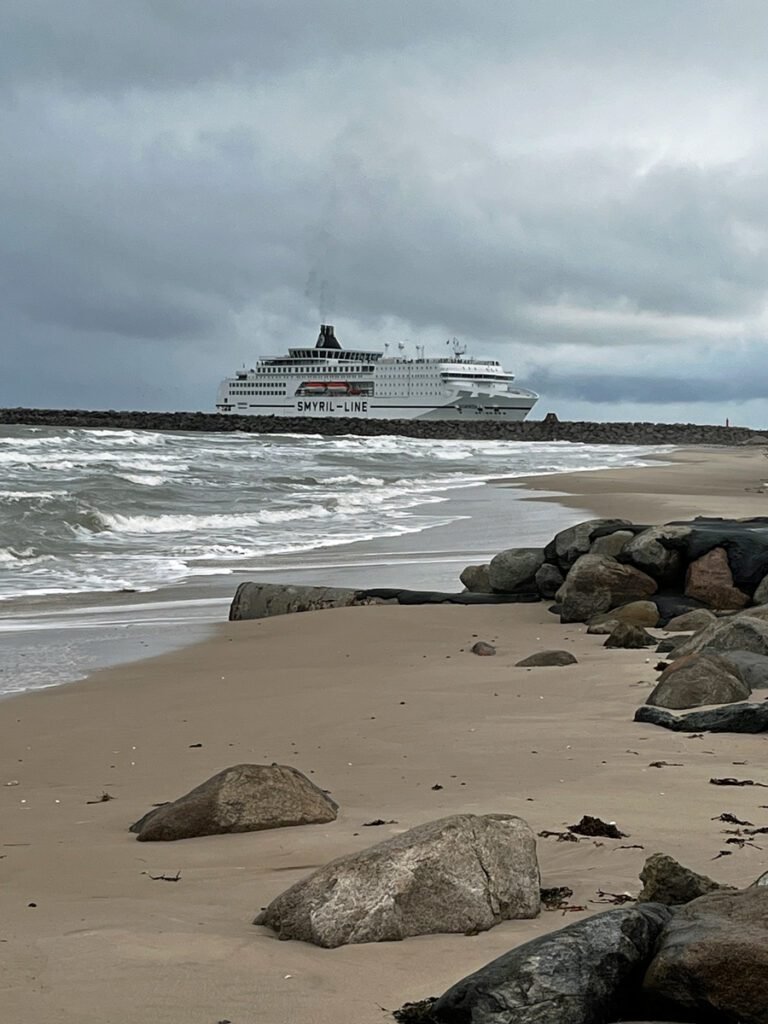
Hirtshals is one of Denmark’s key international ferry ports. Whether departing north or simply watching ships leave harbour, the ferry traffic reinforces Hirtshal’s identity as a town shaped by the sea.
Smyril Line — Faroe Islands and Iceland
The Smyril Line ferry Norröna operates services to:
- Tórshavn (Faroe Islands)
- Seyðisfjörður (Iceland, seaonal)
The crossing to the Faroe Islands takes approximately 36 hours and is a memorable North Atlantic journey in itself. If you are travelling onward to Iceland (3-day journey), this is one of the few sea routes directly linking mainland Europe to Iceland, the Faroes, and beyond.
Fjord Line — Norway
Fjord Line operates services from Hirtshals to several Norwegian destinations, including Kristiansand, Stavanger, and Bergen. These crossings make Hirtshals an important gateway between Denmark and Norway.
Related Posts
If you missed Part 1 of my Nordic Slow Travel Series, you can find it here:
And keep a watch out for Part 3, when I venture onward to the Faroe Islands and all that it offers.
Leave a Reply